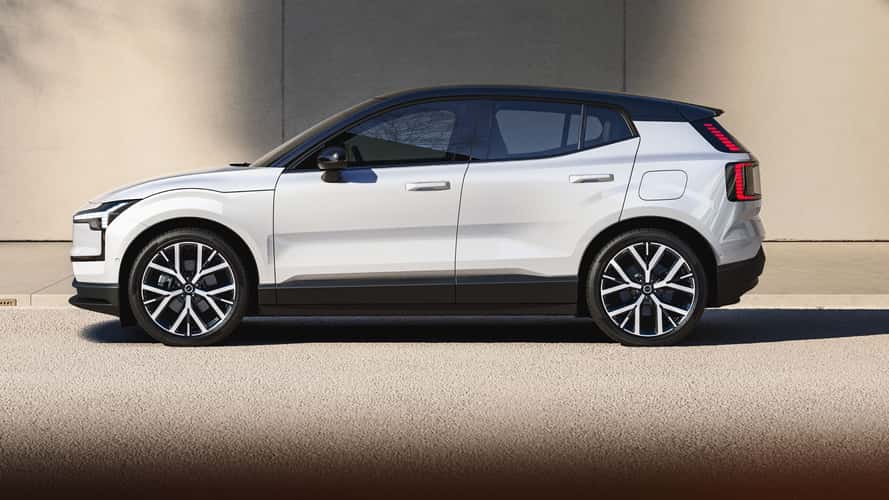
Volvo and Google have previewed a new AI concept that allows the upcoming Volvo EX60 to understand and discuss its surroundings using built-in vehicle cameras and Google’s Gemini model. Demonstrated during Google I/O, the technology can interpret road signs, identify buildings and respond to voice questions from the driver or passengers in real time.
The Volvo EX60 is being used as the first vehicle to demonstrate how Google’s Gemini AI assistant could work directly with a car’s camera systems. In the concept shown by Volvo and Google, the assistant can access visual information from the vehicle, analyze what it sees and provide natural spoken answers inside the cabin.
For example, a driver could ask the car about a road sign written in a foreign language. Gemini would scan the sign, translate the text and explain its meaning. The system is designed to make information from the outside world more accessible without requiring the driver to use a smartphone or manually search for details.
During the demonstration, Gemini was also asked to identify a tall building visible at the end of a street and suggest whether there was anything interesting nearby. The assistant recognized the Transamerica Pyramid in San Francisco, explained that it is mainly an office building and noted that there is a park at its base. It also offered to plan a route to a nearby location.
The experience is similar in concept to Google Lens, but adapted for the vehicle environment with voice commands, real-time context and deeper integration into the car’s infotainment system. Volvo says the demo offers an early look at how context-aware AI experiences could become part of everyday driving.
The system relies on Gemini’s multimodal understanding, the EX60’s camera data, its neural processing engine and Volvo’s software-defined vehicle architecture. These elements allow the car to process information from the outside environment and turn it into relevant answers for occupants.
Although the project has not yet been released publicly, Volvo and Google describe it as a promising step toward more intelligent in-car assistants. The companies have not announced when the feature could become available on the EX60 or on other vehicles equipped with Google built-in infotainment.
Google says privacy has been considered in the development of the feature. According to the company, the camera-based AI experience works only with the driver’s permission, and faces are blurred when images are analyzed.
This approach is intended to address concerns around camera use and AI processing inside connected vehicles, especially as cars become more capable of interpreting their surroundings through sensors and software.
Alongside the Gemini camera concept, Google also confirmed more updates for vehicles with Google-based infotainment systems. A car-optimized version of YouTube Music is planned, along with 3D Immersive Navigation in Google Maps and deeper Gemini integration that could allow the assistant to control various vehicle functions through voice commands.
Google Maps’ Immersive Navigation feature has already reached Android smartphones and Android Auto, and it is now planned for cars with Google built-in. The first Volvo models expected to receive the new Google Maps Immersive Navigation feature are the EX60, EX90 and ES90.