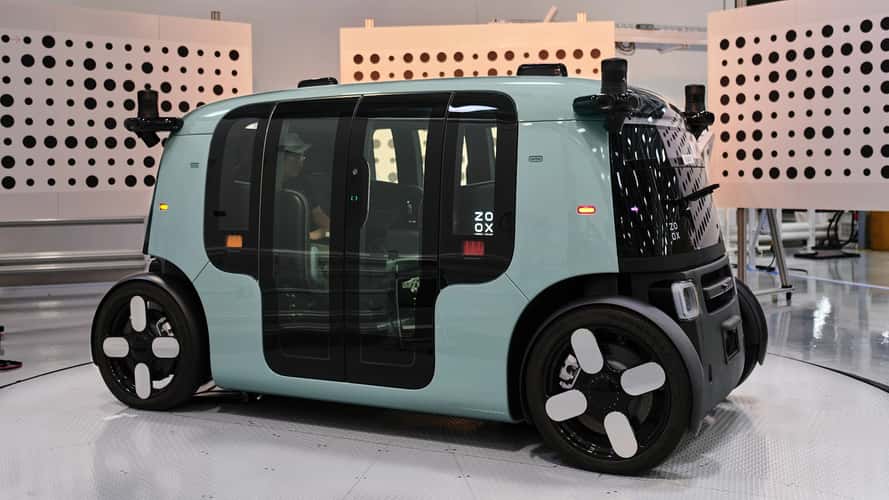
Zoox has received a temporary exemption from the National Highway Traffic Safety Administration that allows the company to begin commercial deployment of its purpose-built autonomous pods. The vehicles do not have a steering wheel, pedals or side mirrors, making the decision a first for this type of robotaxi in the United States. Zoox had already been carrying passengers on a limited basis in Las Vegas and San Francisco, but those rides were free.
The exemption permits Zoox to deploy up to 2,500 vehicles per year for two years. NHTSA said the company will operate under an enhanced and adaptable oversight structure designed to evolve as the technology develops. Zoox had previously received an exemption that covered demonstration use, while the new decision allows commercial deployment, subject to any state-level permissions that may also be required.
Zoox said it planned to begin charging fares in Las Vegas next month. The company is already offering limited passenger rides in parts of the city, and the federal exemption removes a major barrier to converting that service into a paid operation. Commercial service in California would require additional permits from the California Department of Motor Vehicles and the California Public Utilities Commission. Zoox said it is working closely with regulators in both states as it moves toward commercial operations.
Unlike services that adapt existing passenger vehicles, Zoox designs and manufactures its autonomous pods in California specifically for ride-hailing. The cabin has two rows of bench seats facing each other, and the vehicle is bidirectional. Waymo operates modified Jaguar I-Pace electric vehicles, while Tesla's early Robotaxi service uses Model Y vehicles. The Zoox approval applies to a vehicle conceived without the controls normally intended for a human driver.
The decision also highlights the regulatory path facing other purpose-built autonomous vehicles. Tesla would need a similar exemption before deploying its Cybercab, which also lacks a steering wheel and pedals. Cruise, the now-defunct autonomous vehicle startup owned by General Motors, sought an exemption for its Origin shuttle but never received it.
Alongside the Zoox announcement, NHTSA issued an interim final rule allowing vehicles manufactured before an exemption is granted to become eligible for commercial deployment. The agency also said it is streamlining the exemption application process. In addition, NHTSA and the SAE Industry Technologies Consortia are funding a three-year consortium focused on developing unified national standards for autonomous-vehicle performance and safety.
Self-driving companies currently have to navigate different state and local requirements in addition to federal rules. NHTSA Administrator Jonathan Morrison said the agency aims to support safe deployment while removing unnecessary barriers, developing guidance and maintaining enforcement oversight as performance requirements are created. For Zoox, the immediate next step is to secure any remaining state approvals and move from free passenger rides to a paid service in the markets where regulators permit it.