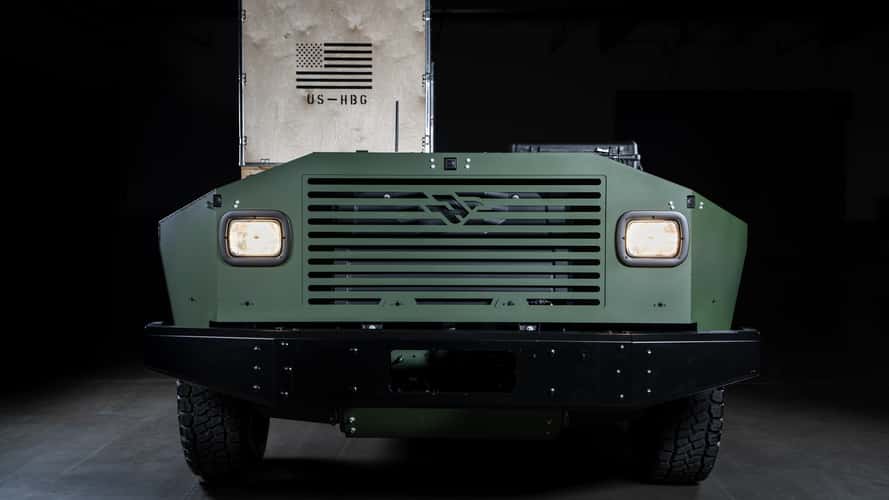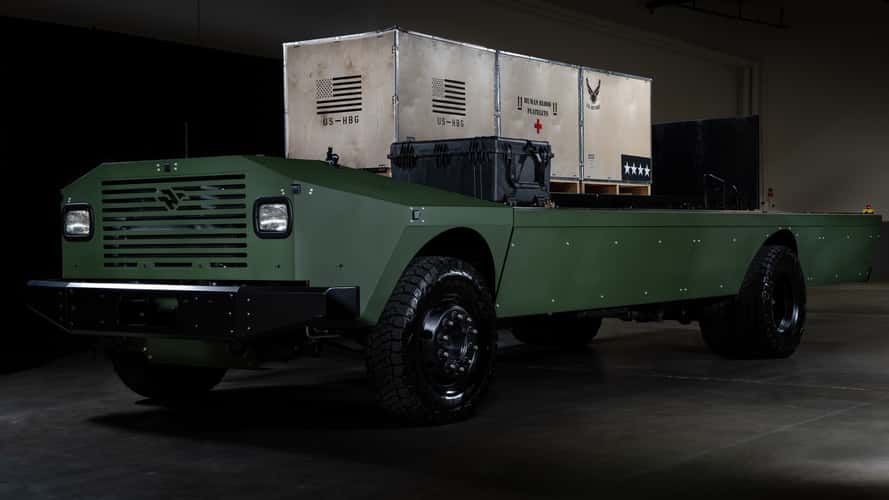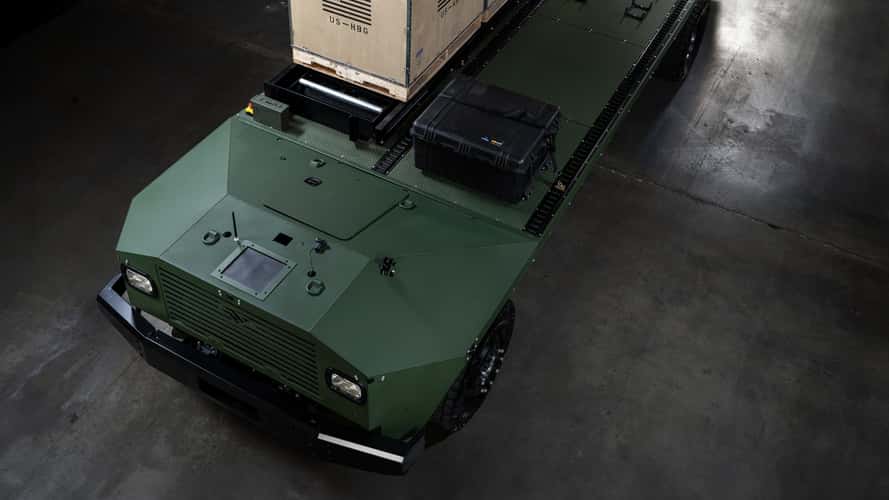
American Rheinmetall has received an 18-month U.S. Army contract to develop and deliver a new autonomous uncrewed ground vehicle built on Harbinger’s extended-range electric platform.
The vehicle is intended for logistics missions in dangerous areas where the Army wants to reduce the number of soldiers exposed to attacks. American Rheinmetall will act as the prime contractor, using Harbinger’s Praesidia architecture as the basis for the new uncrewed ground vehicles.
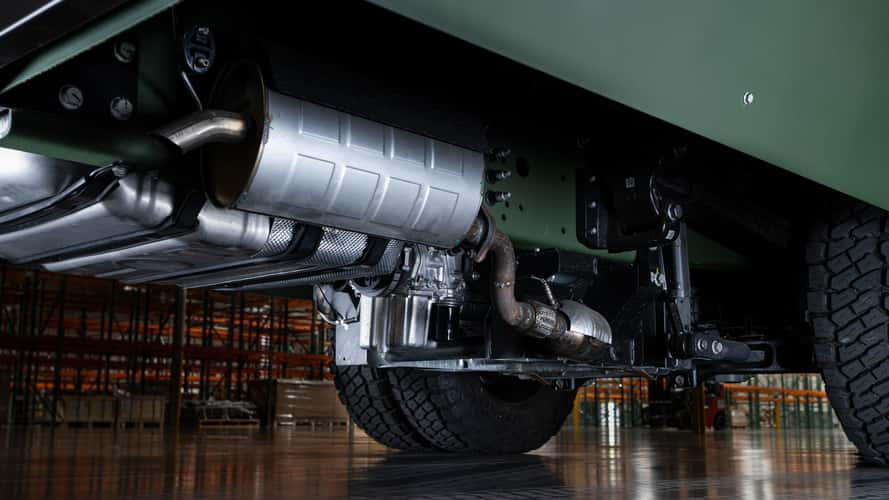
Harbinger’s platform combines a high-torque electric motor, a high-voltage battery and a compact gasoline engine. The engine can recharge the battery when external charging is unavailable and can also provide power to external systems. Because the gasoline engine has no mechanical connection to the wheels, propulsion is handled electrically, making the setup an extended-range EV even though Harbinger describes it as a plug-in hybrid.
The Praesidia platform can export up to 350 kilowatts of power to external equipment. Harbinger lists 48 kW of continuous output from the gasoline engine and a 15 kW onboard inverter for split-phase AC power, with the high-voltage battery supplying the remaining output. This gives the military platform a role beyond transportation by allowing it to support other systems in the field.
Harbinger says the chassis can travel more than 500 miles with a full fuel tank and a fully charged battery. Its electric-only range is approximately 105 miles. The company offers three wheelbases for the military platform: 158 inches, 178 inches and 208 inches. American Rheinmetall has not disclosed which wheelbase or wheelbases will be used for the Army vehicles.
Each available wheelbase carries a gross vehicle weight rating ranging from 16,000 to 26,000 pounds, while the maximum payload is listed at 18,000 pounds. The architecture also includes drive-by-wire technology, allowing third-party systems to control the vehicle without requiring conventional mechanical driving inputs.
American Rheinmetall has brought in Forterra and Primordial Labs for key parts of the project. Forterra will provide autonomous driving software designed to let the vehicle navigate and operate with minimal human input. Primordial Labs will integrate its Anura human-machine interface, which converts natural-language voice commands into vehicle inputs.
The contract was awarded through the Army’s Project Sustainment program. The program is intended to address the growing threat to logistics convoys from remotely operated drones and long-range precision strikes. By moving fuel, weapons and other cargo with uncrewed vehicles, the Army aims to reduce the number of personnel placed inside vehicles carrying hazardous loads.
The project is being handled through the National Advanced Mobility Consortium, a government-industry partnership that allows the Army to fund experimental vehicle development faster than through the traditional acquisition process. The source does not provide a delivery schedule beyond the 18-month contract period or disclose the final configuration of the completed vehicles.