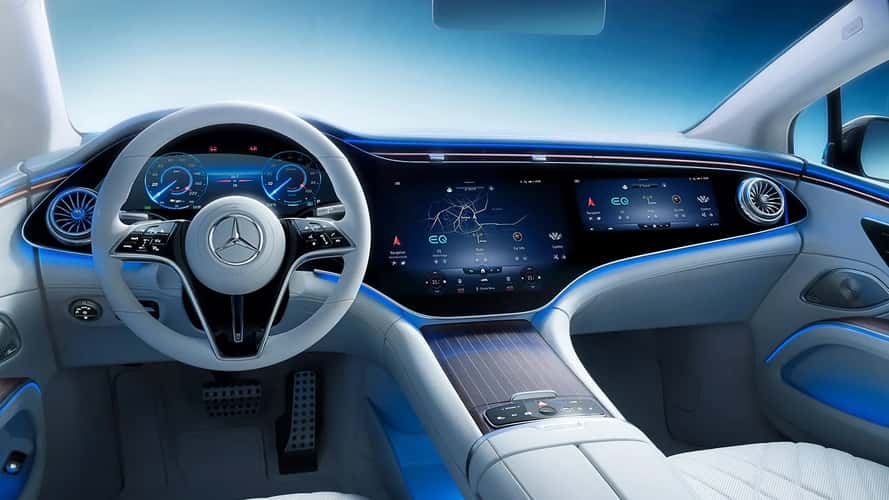
Mercedes-Benz has acknowledged that its recent interior strategy removed too many conventional controls. Chief executive Ola Kallenius said the wider auto industry had moved too far toward digital interfaces and that future Mercedes vehicles would again include what he called the “most sensible buttons.” The change does not signal an end to the company’s large-screen approach, but it does mark a shift away from placing every function inside touch-based menus.
Kallenius made the comments in an interview with AutoCar, saying manufacturers had sometimes pursued technology for its own sake and lost sight of customer needs. He said Mercedes was already working to reintroduce more physical controls. His remarks separate two design choices that have often appeared together: increasingly large dashboard displays and the removal of knobs, switches and buttons. Mercedes remains committed to prominent screens while reconsidering how drivers interact with frequently used functions.
The new CLA provides an early example of that change. Its steering wheel uses a physical volume knob rather than the touch-sensitive slider found in some recent Mercedes interiors. However, the steering-wheel layout does not provide a control for skipping tracks. The example shows that the company’s revised approach is selective rather than a complete return to traditional dashboards.
Kallenius said Mercedes would bring back only controls it considers sensible. That means the company is not planning to replace its digital interface with an interior dominated by conventional switches. Instead, it is seeking a balance in which certain common operations can be handled physically while other functions remain integrated into screens and software.
Mercedes is not alone in changing direction. Volkswagen, Hyundai and Porsche are also moving away from relying exclusively on screens and are adding more manual controls. Scout Motors is taking a more deliberately retro approach, using a wide selection of buttons and switches as part of its cabin design. Together, these moves show that loveral manufacturers are reassessing the usability of touch-heavy interiors.
Safety testing is also influencing the debate. Europe’s New Car Assessment Program has introduced penalties for vehicles that remove certain physical controls. That policy adds a measurable safety dimension to a discussion that had often focused on design and visual simplicity. Mercedes’ decision to restore some knobs, levers and dials therefore comes as both customer criticism and testing standards place more attention on how drivers operate basic functions.
The company is still developing voice-control technology, another route being pursued by automakers including Tesla and Rivian. Kallenius’ comments suggest that Mercedes does not view physical controls and voice systems as mutually exclusive. Large displays, software-based menus and voice commands will remain part of its interiors, but they will be joined by selected tactile controls where the company believes they improve usability.
The next stage will be visible in future Mercedes models as the revised control strategy reaches production vehicles. The company has not detailed every function that will regain a button, nor has it said that all touch-sensitive controls will disappear. What it has confirmed is a change in direction: screens will remain central to the cabin, while some everyday operations will again be assigned to physical hardware.