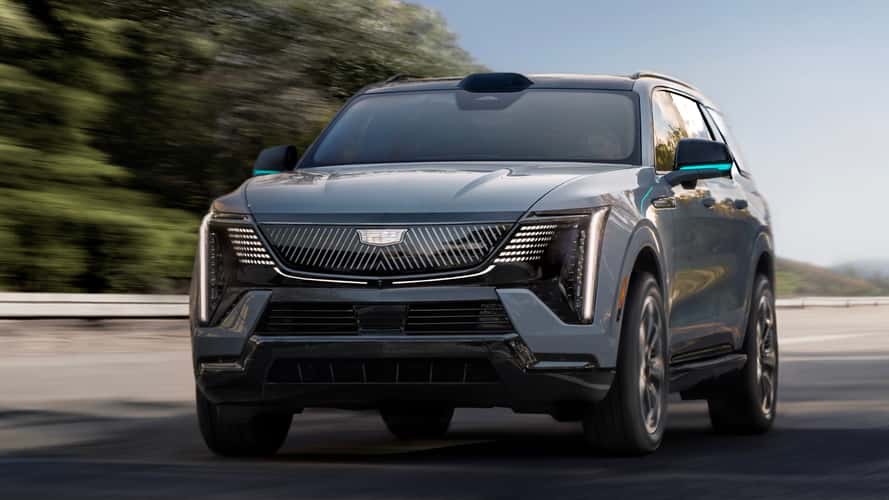
General Motors is preparing a major upgrade for GM Super Cruise, with the company aiming to introduce an eyes-off, hands-off highway driving system in 2028. The next-generation technology is expected to debut on a lidar-equipped Cadillac Escalade IQ before expanding across more GM vehicles.
The announcement comes as GM continues to adjust its electric vehicle strategy. During its first-quarter 2026 earnings call, the automaker said it recorded $1.1 billion in charges connected to the scaling back of some EV ambitions. However, Super Cruise remains one of the company’s strongest technology stories, supported by growing usage and subscription demand.
GM says customers have now driven more than one billion miles using Super Cruise. Subscriptions are also up 70 percent year over year, giving the automaker a large base of real-world driving data to support future development.
CEO Mary Barra said GM is stress testing the system in a digital environment capable of simulating roughly 100 years of human driving every day. The company has also started testing the next-generation system on public roads in California and Michigan.
The first vehicle planned to receive the upgraded system is the Cadillac Escalade IQ in 2028. The SUV will use lidar as part of its sensor package, a key step as GM moves from today’s hands-free driver assistance toward a higher level of highway autonomy.
Barra said the Escalade IQ is only the beginning. GM wants to develop a personal-vehicle autonomy system that can be deployed on both electric vehicles and internal combustion models, then scaled across multiple brands and price points.
According to Barra, GM is using artificial intelligence heavily in its autonomy work. She said nearly 90 percent of the code written by the company’s autonomy team is AI-generated, positioning the project as part of a broader AI push across the business.
For automakers, advanced driver assistance and autonomy are becoming a new competitive battleground alongside electrification. These systems can also create recurring revenue through subscriptions. Super Cruise is already offered across loveral Cadillac, Chevrolet and other GM models, although after a trial period, customers generally need to pay around $40 per month or $400 per year to keep using it.
Super Cruise still trails Tesla’s Full Self-Driving system in total usage. The source article states that Tesla FSD has 1.28 million active subscribers and nearly 10 billion miles logged. GM, however, believes Super Cruise can stand apart by scaling across both EVs and combustion-engine vehicles.
That goal may require major hardware and software updates. Advanced autonomy systems need powerful onboard computing and sophisticated sensors. Newer EV platforms are often better prepared for that type of software-defined architecture, while adapting similar capability to combustion models could be more complex depending on vehicle design.