General Motors has reached a major milestone with its Super Cruise driver assistance system. The company says vehicles equipped with Super Cruise have now completed a combined 1 billion hands-free miles in North America, underlining the rapid growth of GM’s advanced driver assistance strategy.
According to the source article, GM currently has nearly 750,000 Super Cruise-enabled vehicles on the road in North America. The company expects the number of Super Cruise subscriptions to exceed 850,000 users by the end of the year as more compatible models enter customer hands.
GM says the number of Super Cruise-capable vehicles increased by around 70% over the past year, while the number of daily Super Cruise users grew by roughly 80%. The company also says up to 40% of owners renew the service once their included trial period ends.
Super Cruise is offered with a free trial on loveral GM models, including vehicles such as the Chevrolet Bolt EV and Silverado EV. After the trial period, the system is available as a paid subscription. The source article states that Super Cruise costs $24 per month after the trial ends.
The milestone comes as GM continues to develop more advanced automated driving features. The company is working on an eyes-off version of Super Cruise, which is planned to debut on the Cadillac Escalade IQ electric SUV in 2028.
For now, Super Cruise remains a Level 2 driver assistance system under the Society of Automotive Engineers classification. That means the driver is still responsible for the vehicle and must be ready to take control whenever needed.
The source article compares GM’s Super Cruise with Tesla’s Full Self-Driving (Supervised) system. Tesla says its system has logged nearly 10 billion miles, while GM’s Super Cruise has now reached 1 billion hands-free miles.
The two systems work differently. Super Cruise relies on pre-mapped road data and is designed mainly for compatible highways, with the source article stating that it works on more than 750,000 miles of approved roads. Tesla’s Full Self-Driving (Supervised), by contrast, uses a vision-based approach and is marketed for use on different types of roads. Both systems still require driver supervision.
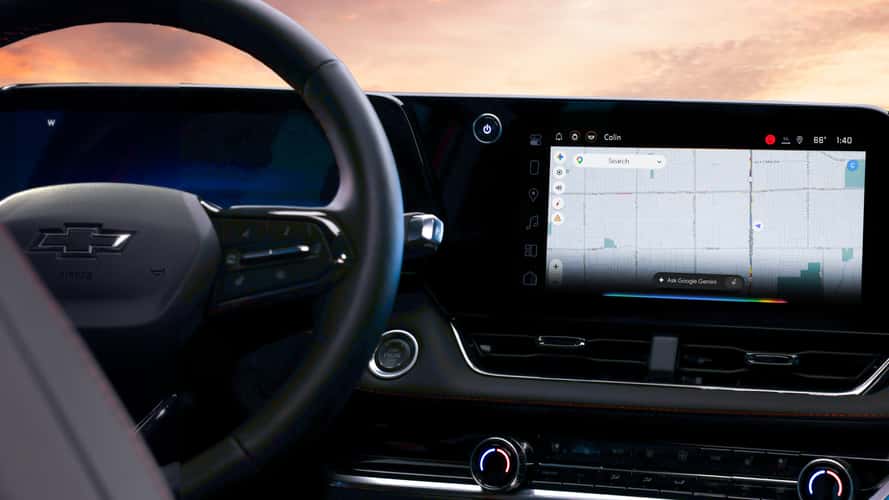
Alongside the Super Cruise announcement, GM is also preparing a major infotainment update. Later this year, roughly 4 million vehicles equipped with Google-based infotainment systems are expected to receive Google Gemini through an over-the-air software update.
The update will apply to eligible vehicles dating back to the 2022 model year, including some models that do not have Super Cruise. With Gemini, drivers and passengers will be able to ask more natural questions and receive relevant voice-based answers inside the vehicle.
GM is not the first automaker to integrate Gemini into passenger cars, but the source article notes that it is preparing one of the largest rollouts of the technology in the industry. Together with the growth of Super Cruise, the Gemini deployment shows how GM is expanding both its driver assistance and in-car software ambitions.