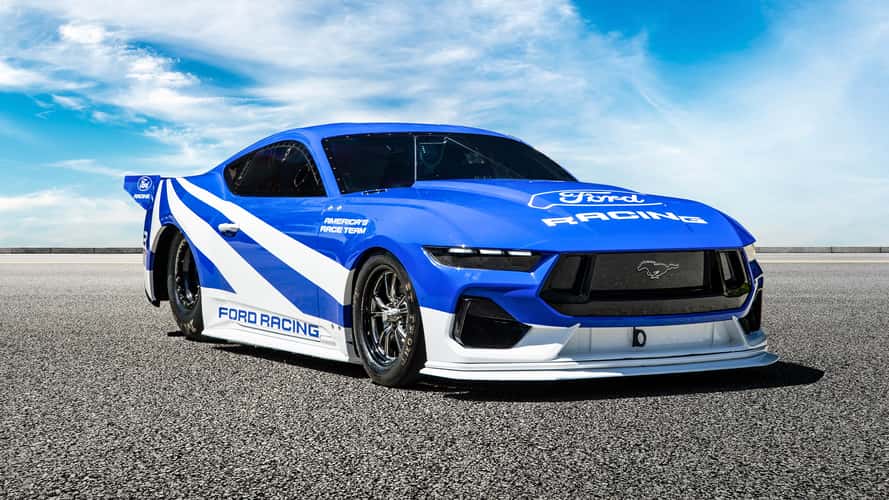
Ford has set a new electric drag racing benchmark with the Mustang Cobra Jet 2200. The heavily modified electric Mustang completed the quarter mile in 6.76 seconds at 222 mph during the NHRA Charlotte event, making it the fastest electric drag racer over that distance in the United States, according to the source article.
The record highlights Ford’s continued interest in high-performance electric technology, even as the company adjusts parts of its broader EV strategy. Unlike a regular road-going Mustang, the Cobra Jet 2200 is a purpose-built drag racing machine designed to extract maximum performance over a short distance.
The Mustang Cobra Jet 2200 uses two electric motors mounted under the hood. Together, they send 2,200 horsepower and 1,340 pound-feet of torque to the rear wheels. Managing that level of output was one of the biggest engineering challenges behind the project.
Although electric vehicles often use simpler drivetrains than combustion-powered cars, Ford chose a five-speed transmission typically found in gas-powered drag racers. The goal was to control how the enormous electric torque reached the track without overwhelming the tires or damaging components.
Ford paired the clutchless transmission with a Reverse-Acting Centrifugal Clutch, known as RACC. This setup allows the car to launch in direct drive and then slip during gear changes, helping reduce tire slip and keep the vehicle stable throughout the run.
The result is a blend of advanced electric propulsion and proven drag racing hardware. While the Cobra Jet 2200 is not intended for ordinary road use, the project gives Ford valuable data on how high-output electric powertrains behave under extreme loads.
The Cobra Jet 2200 follows earlier Ford electric drag prototypes, including the Super Cobra Jet 1400 and Super Cobra Jet 1800. Compared with those previous cars, the new version is both more powerful and significantly lighter.
According to the source article, Ford managed to make the Cobra Jet 2200 more than 900 pounds lighter than the Super Cobra Jet 1800. That earlier car was already around 1,000 pounds lighter than the Super Cobra Jet 1400. Weight reduction played a major role in achieving the new record, with engineers reportedly cutting mass wherever possible, even by using slimmer vinyl.
The Mustang Cobra Jet 2200 uses a tube-frame chassis, a carbon-fiber body and a fully custom racing setup. It only resembles the production Mustang from the outside, while underneath it is built specifically for the drag strip.
Ford Racing Engineering Manager Nick Kuhajda said the official result matters, but the larger value comes from the data collected during each run. According to Kuhajda, every pass helps the team understand the technology better and set new targets for future development.
For now, the Cobra Jet 2200 will remain a motorsport-focused demonstrator. However, the lessons learned from its extreme electric drivetrain could eventually influence future Ford EVs, especially as the brand continues developing performance-focused electric technology.