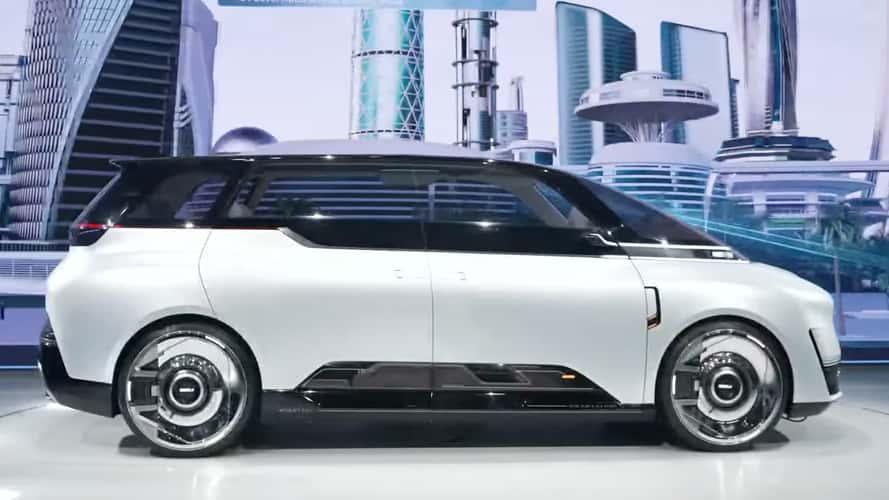
Geely has revealed the EVA Cab, a new autonomous vehicle designed specifically for robotaxi fleets. Developed with Afari Technology and CaoCao Mobility, Geely’s ride-hailing division, the EVA Cab has no steering wheel, supports automated battery swapping and is intended to enter service next year before larger-scale deliveries begin in 2028.
Geely says the EVA Cab was created from the beginning for robotaxi use, rather than being adapted from a conventional passenger car. The vehicle was shown at the Beijing Auto Show and is aimed at large ride-hailing fleets that need purpose-built autonomous vehicles instead of modified production cars.
The project brings together three key parts of the operation. Geely provides the vehicle, Afari Technology supplies the autonomous driving technology, and CaoCao Mobility gives the project access to an existing ride-hailing platform.
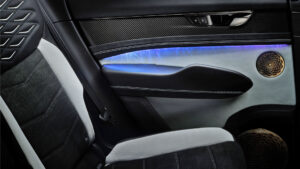
Geely has not fully revealed the EVA Cab’s interior, but the source says the vehicle does not appear to have a steering wheel or a front passenger seat. Instead, the cabin seems to be arranged around a central passenger area, making it feel more like a lounge than a traditional car interior.
Passengers enter through electric sliding doors that open wide to make access easier. The design is clearly focused on frequent ride-hailing use, where easy entry and exit are more important than conventional car styling.
The EVA Cab has been developed for high-volume fleet operations, so Geely has added features aimed at reducing downtime. The vehicle supports fully automated battery swapping, which could allow operators to keep robotaxis in service without long charging stops.
It also supports automatic cleaning, another important feature for vehicles that may carry many passengers throughout the day. Geely has also removed door pockets to reduce the chance of passengers leaving items behind inside the vehicle.
Geely describes the EVA Cab as China’s first true purpose-built robotaxi, but the source questions that claim. Baidu introduced the Apollo RT6 in 2022, and that vehicle was also developed for autonomous ride-hailing use, even though it looks more like a conventional people carrier.
The EVA Cab, however, has a much more unusual appearance. The source compares its shape to a stretched, futuristic Fiat Multipla, with high-mounted headlights positioned just below the windshield.
According to the source, CaoCao Mobility wants to add 100,000 EVA Cabs to its fleet by 2030. Initial deployment is expected to begin next year in Abu Dhabi, Hong Kong and five major Chinese cities.
Geely also plans large-scale deliveries from 2028, which suggests the company is looking beyond a small pilot program and aiming for a serious robotaxi fleet business.
The EVA Cab shows that Geely is taking the autonomous ride-hailing market seriously, but building a purpose-designed robotaxi is only part of the challenge. Reliable Level 4 autonomous driving remains difficult for most companies, and running large fleets of driverless vehicles must also make financial sense.
In other words, the EVA Cab may be an important step for Geely, but its real test will come after launch. Making thousands of autonomous vehicles operate safely, reliably and profitably every day will be far harder than designing the vehicle itself.