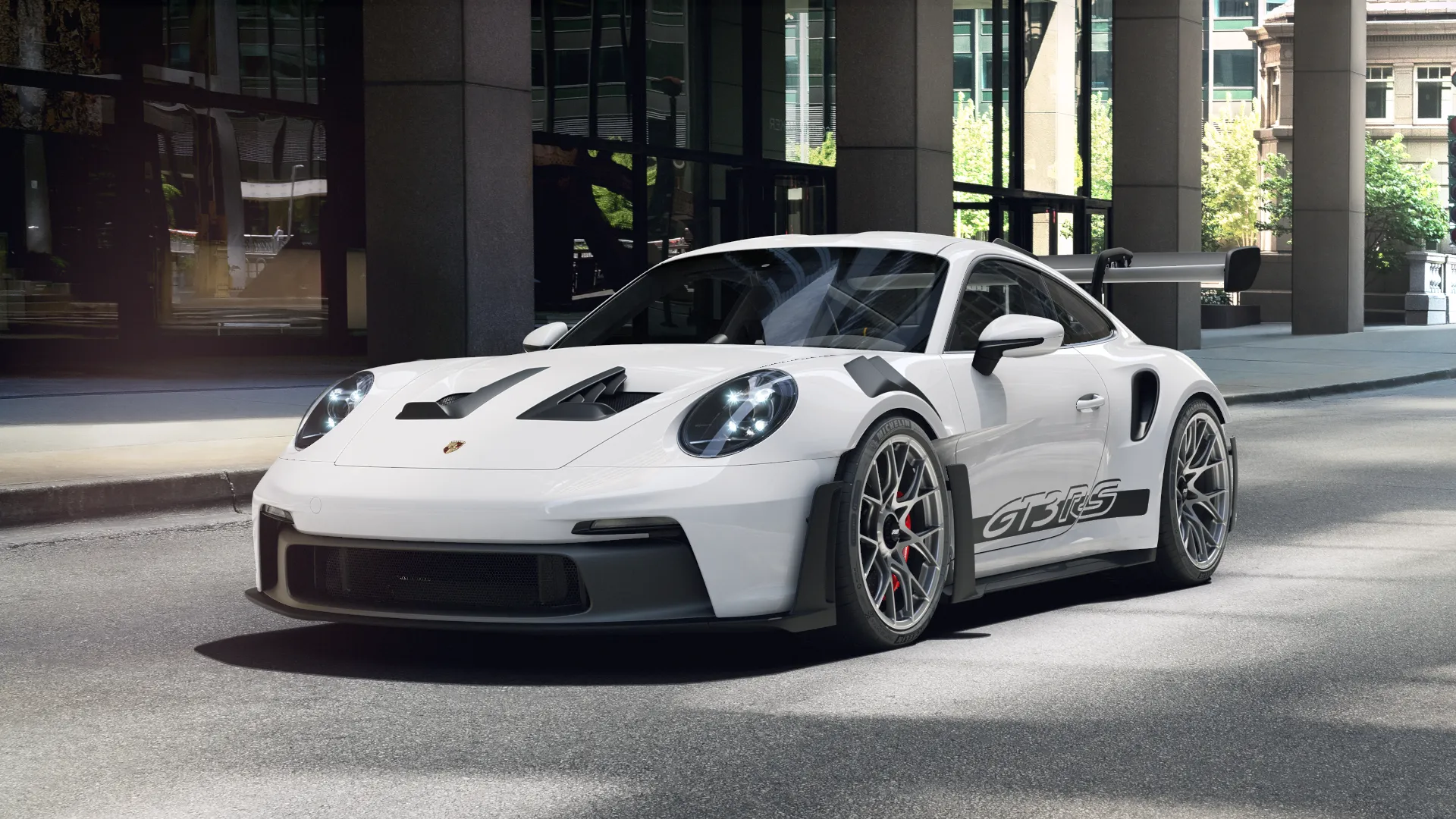
The Porsche 911 GT3 RS badge stands as one of the most recognizable emblems in the high-performance car world. More than just a model name, it represents a distinct philosophy rooted in motorsport, precision engineering, and driver engagement. At a time when many performance cars are becoming more refined, digital, and less visceral, the GT3 RS remains a symbol of focused driving passion.
The GT3 RS name is carefully chosen. “GT3” comes from a racing category prioritizing balance and driver skill over sheer power, while “RS” stands for “RennSport,” German for racing sport, a designation reserved for Porsche’s most uncompromising road cars. The badge signals a car engineered not for comfort, but for performance, with every design and engineering decision made in service of that goal. Light weight, sharp dynamics, and minimal distractions define the GT3 RS experience.
The latest 992-generation Porsche 911 GT3 RS builds on this heritage with advanced engineering. It uses a 4.0-liter naturally aspirated flat-six engine, producing 518 hp and 342 lb-ft of torque, revving to 9,000 rpm. The focus on natural aspiration is increasingly rare in a market dominated by turbocharging and hybrid technology. Acceleration from 0 to 100 km/h takes just over 3 seconds, and top speed is around 296 km/h. The car features only a seven-speed PDK dual-clutch automatic, deliberately excluding manual options for optimal track performance.
Aerodynamics are a central feature. The GT3 RS sports a prominent rear wing, functional front elements, and an active Drag Reduction System (DRS), all contributing to high downforce and stability at speed. Rear-wheel steering and adjustable suspension further sharpen on-track handling, while extensive use of lightweight materials inside and out keeps mass to a minimum.
The cabin of the GT3 RS is stripped of excess. Alcantara and carbon-fiber dominate, with bucket seats and a driver-oriented layout. There is little in the way of comfort or luxury features; instead, every element exists to enhance the driving connection. This spartan approach is increasingly rare in an era where most sports cars prioritize technology and convenience.
The starting price for the 911 GT3 RS is high, exceeding $240,000 before options. Packages such as the Weissach Package add further cost, but also reduce weight and increase performance. Despite the price, demand regularly outpaces supply, and allocations are limited. This exclusivity has led to strong residual values, with some models appreciating over time depending on specification and condition. Ownership is as much about access to a legacy as it is about the driving experience itself.
In the current market, the GT3 RS stands apart from rivals. While models like the McLaren 765LT and Ferrari 296 GTB offer greater power using turbocharging and hybridization, and the 911 Turbo S provides more everyday usability, the GT3 RS prioritizes a direct, analog connection to the road. Competitors such as the Lamborghini Huracán STJ echo the naturally aspirated, track-focused ethos, but the Porsche’s discipline and precision set it apart.
The Porsche 911 GT3 RS is not the most powerful or the most comfortable car in its class, but it embodies a philosophy that is increasingly rare: purpose-driven engineering for pure driving engagement. In a landscape dominated by turbocharging and digital assistance, the GT3 RS remains committed to natural aspiration, mechanical feedback, and minimalism. This focus comes at a high price and requires a degree of exclusivity, but for those who value a deep connection between car and driver, few alternatives match the experience. As electrification and technology continue to reshape sports cars, the GT3 RS stands as a testament to what performance can mean when emotion and engineering are placed above raw numbers. Its future may face challenges, but its legacy as a driver’s car is assured.