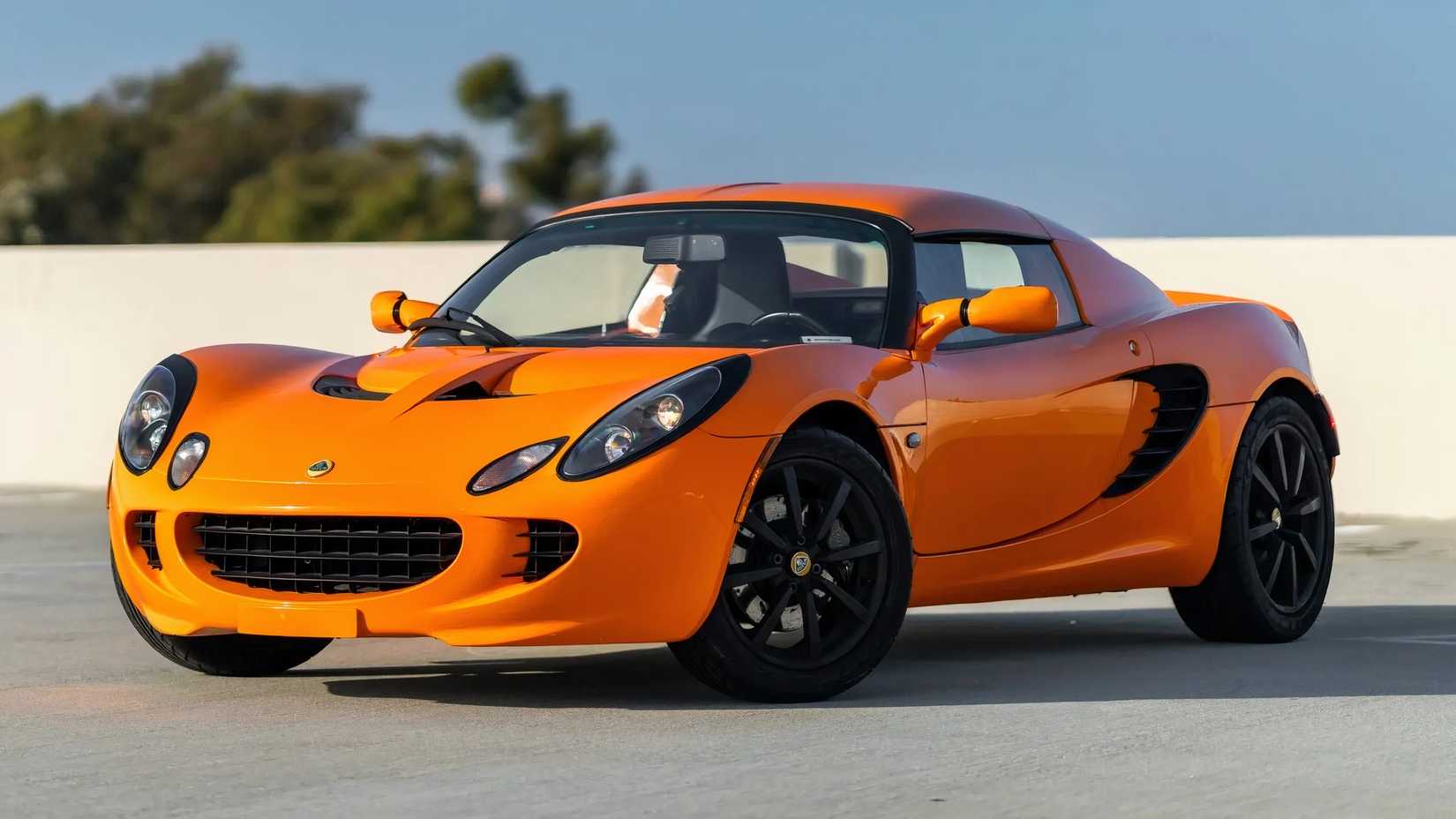
In a market where family sedans like the Toyota Camry can easily exceed 35,000 dollars, the notion of owning a legendary manual sports car for similar money seems almost unthinkable. Yet, the Series 2 Lotus Elise, renowned for its lightweight design and engaging driving dynamics, is now available on the used market at a price comparable to a new top-trim Camry XSE. For enthusiasts seeking a pure analog driving experience, the Elise stands out as a unique alternative to mainstream options.
The 2026 Toyota Camry XSE, with its advanced hybrid powertrain and premium features, tops out at around 35,200 dollars in the US market. Meanwhile, a well-maintained Series 2 Lotus Elise (2005–2011) typically sells for roughly 33,500 dollars, according to recent valuation data. While the Camry offers comfort and reliability, the Elise delivers an entirely different proposition: a focused, visceral sports car for a similar investment.
The Series 2 Lotus Elise was the first Elise officially sold in North America, starting with the 2005 model year. Even with added safety features such as airbags and ABS, its curb weight remains just 1,896 pounds—significantly lighter than comparable roadsters like the Mazda Miata or Honda S2000. The Elise’s chassis and suspension are designed for maximum driver feedback, with a manual steering rack that eliminates any artificial assistance, giving the driver a direct connection to the road.
Powering the Elise is the 1.8-liter Toyota 2ZZ-GE inline-four engine, developed in collaboration with Yamaha. This high-revving engine produces its peak
power above 8,000 rpm, delivering a driving character reminiscent of a motorcycle. The Elise’s combination of low weight and responsive engine results in a sports car with exceptional agility and a uniquely engaging feel.
While new sports cars like the Lotus Emira or Porsche Cayman GT4 command prices well above 100,000 dollars, the Elise remains relatively accessible to enthusiasts. Its closest rivals in terms of driving purity—such as the Mazda Miata and Honda S2000—offer strong alternatives, but neither matches the Elise’s uncompromising focus on lightness and steering precision. The Elise’s manual steering and stripped-back interior make it less practical for daily use, but for those seeking an authentic sports car experience, few vehicles compare.
Looking at the current sports car landscape, the Lotus Elise represents a philosophy that has become increasingly rare: minimal weight, direct controls, and an unfiltered connection between driver and machine. Where rivals offer comfort and technology, the Elise prioritizes raw engagement. Its appeal lies not in outright speed or luxury, but in the purity of the driving experience. For enthusiasts with the means to choose between a new mid-tier sedan and a used Elise, the decision depends on priorities—practicality versus passion. As modern cars continue to add weight and complexity, the Elise’s simplicity becomes even more valuable. For those who appreciate what it represents, the Series 2 Lotus Elise is more than just a car; it is a benchmark for driver-focused engineering that is unlikely to be replicated in today’s market.