Hyundai remains a leading name in hydrogen mobility, investing decades in fuel cell research and development. Despite challenges in mainstream adoption, the brand continues to expand its hydrogen technologies across both passenger and commercial vehicles. Hyundai’s approach is now defined by two standout projects: the retro-inspired N Vision 74 sports car and the next-generation Nexo SUV, both aiming to redefine hydrogen’s role in the green mobility landscape.
The company’s investment in hydrogen dates back to the late 1990s, starting with a dedicated research team and culminating in early prototypes like the Santa Fe FCEV. In 2013, Hyundai launched the ix35 Fuel Cell (known as the Tucson FCEV in some regions), marking the world’s first mass-produced hydrogen passenger vehicle. The Nexo SUV followed in 2018, offering innovations such as air purification and remote parking.
Under its specialized HTWO brand, Hyundai has expanded hydrogen’s reach beyond passenger cars, integrating the technology into heavy-duty vehicles, power generators, and logistics systems. With large-scale infrastructure projects in Korea, Europe, and North America, Hyundai is actively pursuing hydrogen as a cornerstone for global carbon neutrality.
Hyundai has made significant strides in commercial hydrogen vehicles, especially with the XCIENT Fuel Cell truck. This heavy-duty vehicle delivers 469 hp and a range of around 450 miles, addressing the needs of long-haul logistics with quick refueling and high energy density. As of early 2026, Hyundai’s European fleet surpassed 20 million kilometers, while North American operations exceeded one million miles. The company’s hydrogen-powered trucks now operate in South America as well, showcasing the potential of hydrogen for demanding freight applications.
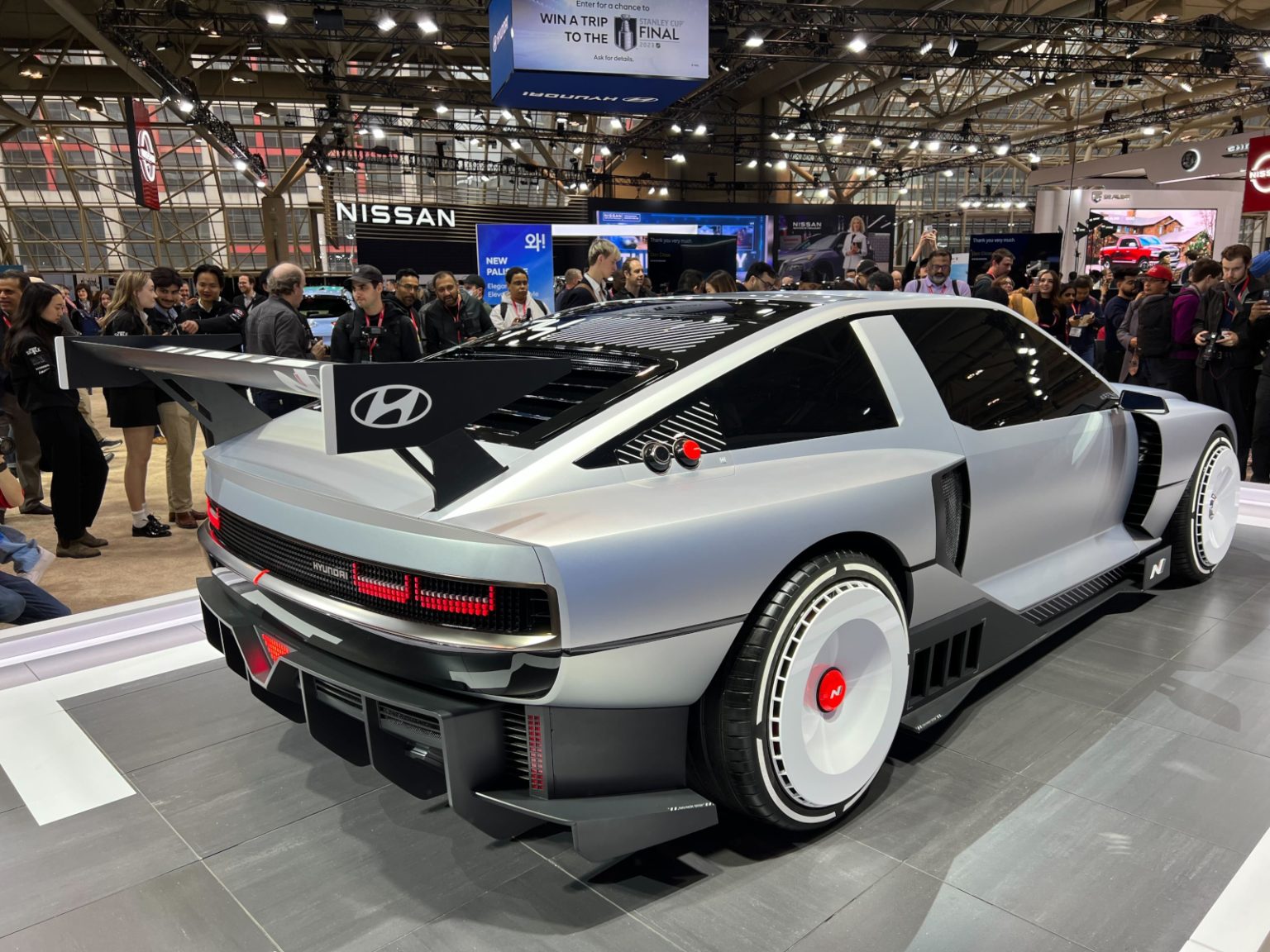
Originally unveiled in 2022, the Hyundai N Vision 74 blends retro styling with advanced hydrogen-electric hybrid technology. Its design pays tribute to the 1974 Pony Coupe concept, combining historical cues with futuristic engineering. The vehicle features a 62.4 kWh battery and a 95 kW fuel cell, enabling both instant torque and rapid five-minute refueling. Rumored for limited production in 2026, the N Vision 74 could shift perceptions by marrying high performance with green technology.
Performance figures are notable: dual rear motors provide precise torque vectoring, with the concept generating 671 hp and 900 Nm of torque. Despite its 2.470 kg weight, the N Vision 74 is predicted to accelerate from 0 to 100 km/h in roughly four seconds, with potential future models aiming for even higher outputs and quicker sprints.
The all-new Nexo advances Hyundai’s hydrogen SUV offering, pairing a 110 kW fuel cell with an 80 kW battery for a total of 255 hp. This results in a 7.8-second 0-100 km/h time and a top speed of 179 km/h. With a 6.69 kg hydrogen storage capacity, the Nexo achieves a WLTP range of up to 513 miles, highlighting the practicality of fuel cell technology for daily use. While Hyundai previously offered the Nexo in the U.S. on a limited basis, the latest model will focus on markets with established hydrogen infrastructure such as South Korea, Europe, and Australia.
Hyundai’s fuel cell vehicles use a hydrogen stack to generate electricity, powering an electric motor with water vapor as the only emission. This system allows for quiet operation, immediate torque, and short refueling times compared to conventional battery EVs. However, widespread adoption faces hurdles due to high hydrogen production costs and limited refueling infrastructure, especially outside of select regions.
Hyundai’s persistence in the hydrogen sector stands in contrast to other manufacturers scaling back their efforts. The N Vision 74’s unique combination of performance and sustainability could make it a pivotal model, demonstrating that hydrogen is not limited to utilitarian applications. Meanwhile, the new Nexo pushes the boundaries of everyday usability for fuel cell vehicles. The challenge remains with infrastructure and cost, but if Hyundai’s approach gains traction, it could prompt wider industry investment and consumer acceptance. The next few years will be crucial in determining whether hydrogen can become a mainstream solution, especially as the brand balances innovation with practical deployment in global markets.