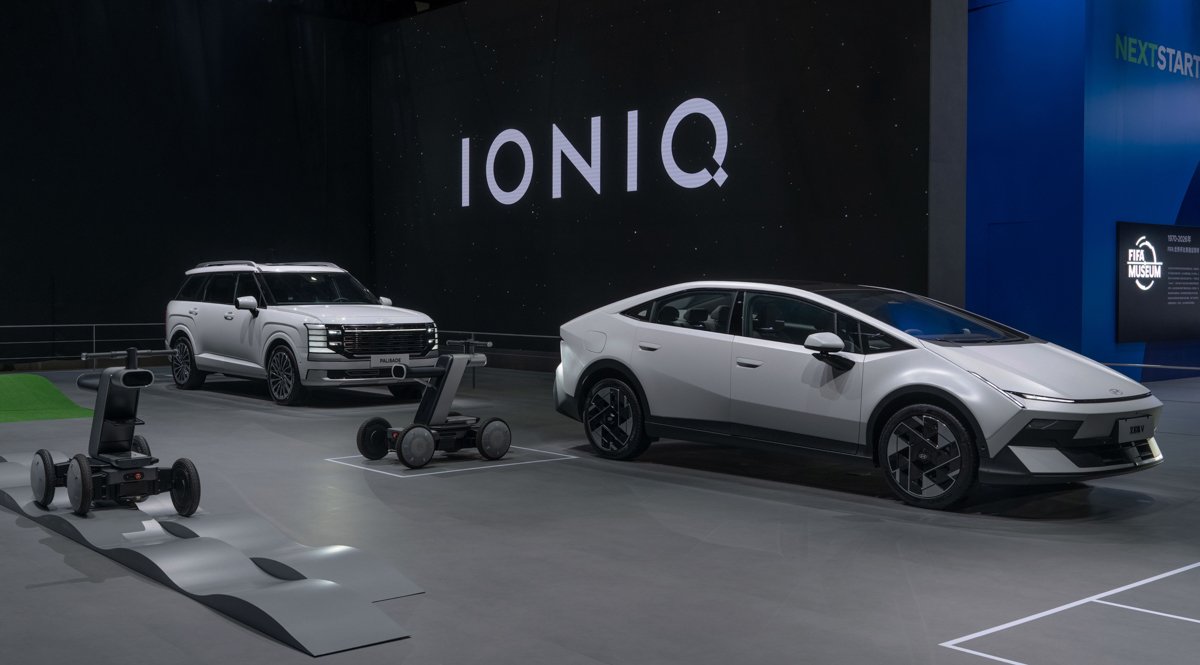
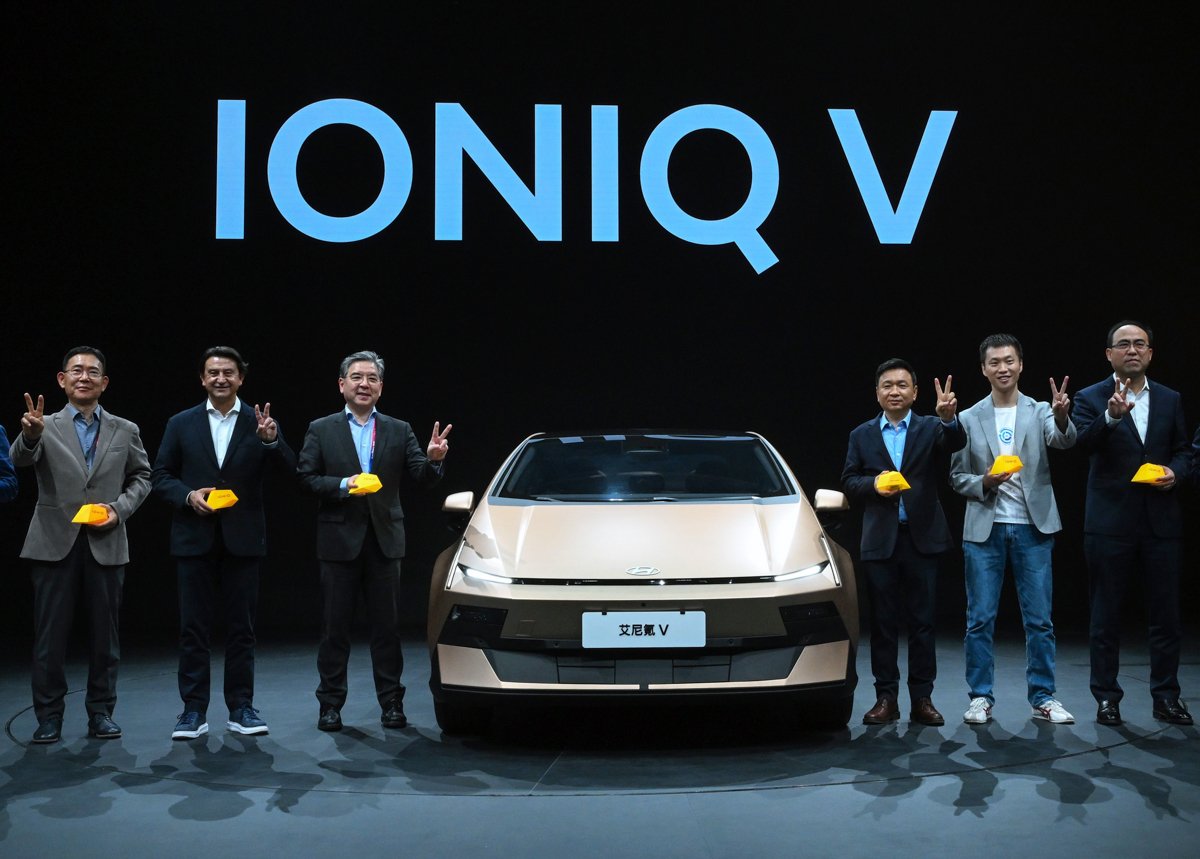
Hyundai has officially introduced the production version of the Ioniq V at the Beijing Auto Show, marking a significant step in its China-focused electric vehicle strategy. The Ioniq V, based on the striking Venus concept, showcases Hyundai’s new Origin design language and is tailored specifically for the Chinese market.
The exterior design of the Ioniq V draws inspiration from a range of sources, blending sharp lines with a bold front fascia reminiscent of both Italian supercars and futuristic concepts. Its stance is tall for a sedan, with a wedged nose and slender lighting elements that create a distinctive profile. Observers will note influences from models like the Tesla Cybertruck and Lamborghini Temerario, combined with practical cues seen in the Toyota Prius.
In terms of dimensions, the Ioniq V measures 4,900 mm in length and 1,890 mm in width, riding on a 2,900 mm wheelbase. This footprint closely matches that of the Ioniq 6, ensuring generous rear legroom—a key requirement for Chinese buyers. Features such as comprehensive parking sensors and cameras are included to assist with maneuvering this sizable sedan in urban environments.
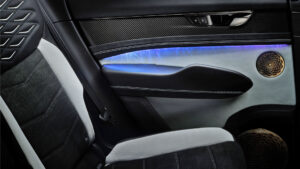
Inside, Hyundai introduces a 27-inch ultra-thin 4K panoramic display spanning the dashboard, accompanied by a head-up display that projects driving information directly into the driver’s field of vision. The cabin is further equipped with an eight-speaker Dolby Atmos audio system and customizable ambient lighting, reflecting the model’s technology-forward positioning.
While Hyundai has not released detailed battery or powertrain specifications, the brand confirms the presence of 800-volt charging architecture. The long-range version is expected to achieve over 600 km of driving range under the CLTC test cycle, although real-world figures will likely be closer to 483 km. This range puts it behind some of its international competitors, such as BMW’s latest electric models, which can exceed 644 km under comparable conditions.
Looking ahead, Hyundai’s plans for China are ambitious, with 20 new hybrid and electric models scheduled for launch over the next five years and a targeted annual sales volume of 500,000 vehicles. An SUV based on the Earth concept is also expected to join the lineup next year. Whether the Ioniq V will be offered in other markets remains uncertain, but Hyundai’s approach in China is expected to influence global product strategies in the near future.
The Ioniq V’s debut underlines Hyundai’s commitment to innovation and adaptation within the world’s largest auto market. By prioritizing interior space, advanced digital features, and a design that bridges practicality with visual drama, Hyundai aims to establish a stronger presence among Chinese EV buyers. The new Origin design language could signal a broader stylistic shift for the brand, with elements likely to filter into future global models. As competition intensifies in the electric sedan segment, Hyundai’s targeted approach in China may provide valuable lessons for its worldwide EV rollout.