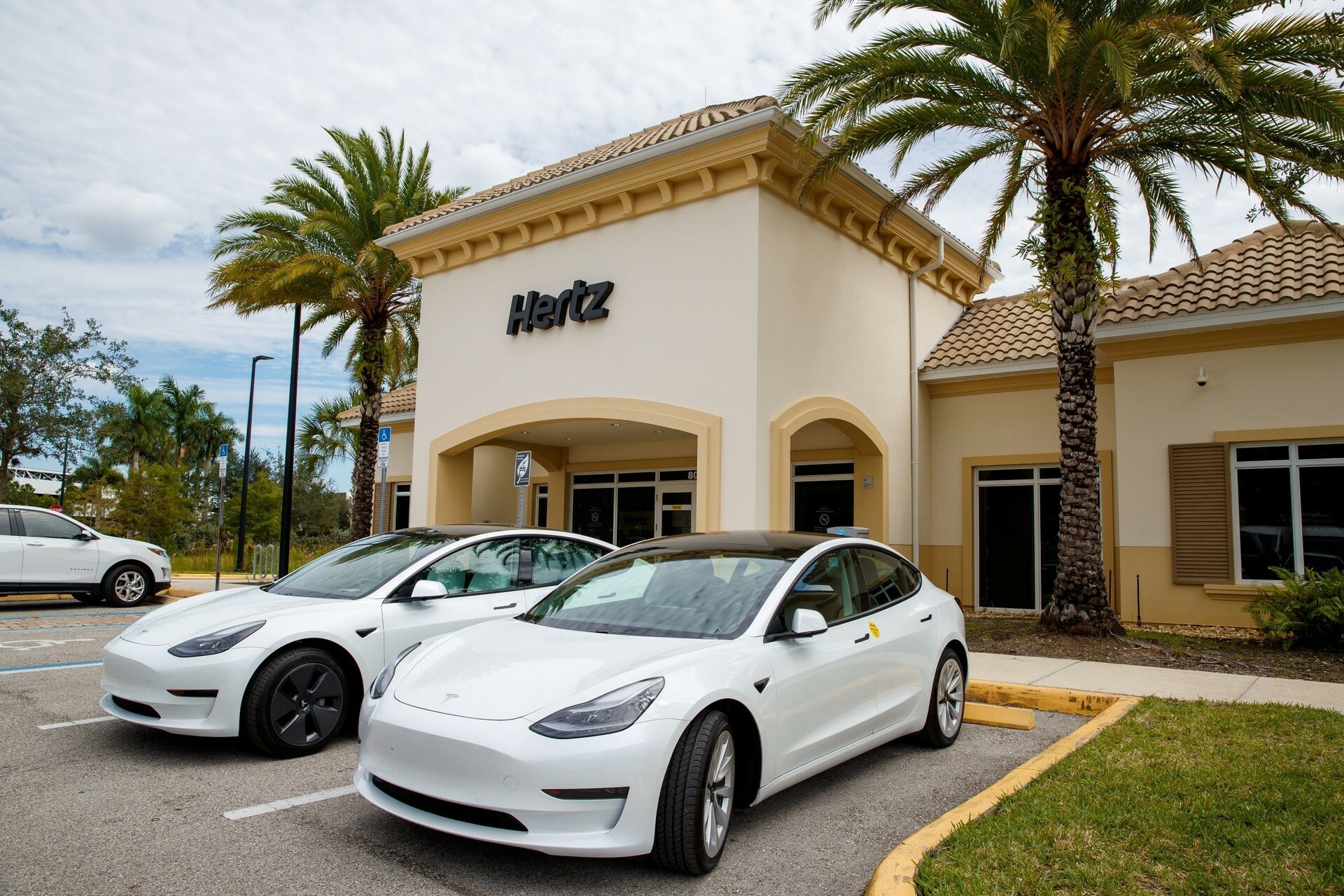
After removing 30,000 electric vehicles from its fleet earlier this year due to high repair costs, Hertz is now experiencing a significant uptick in requests for EV rentals. As fuel prices across the United States surpass $4 per gallon, both traditional rental companies like Hertz and peer-to-peer platforms such as Turo are seeing stronger demand for electric vehicles, even as new car sales in this segment remain sluggish.
According to recent data, Hertz reported a nearly 25 percent increase in EV reservation requests in March compared to February, with the West Coast showing the most notable rise. This region, already accustomed to higher fuel costs and generally more receptive to electric mobility, is driving much of the increased interest. Turo, meanwhile, recorded an 11 percent jump in EV bookings during the final three weeks of March. On March 31—the day national average gas prices exceeded $4 for the first time since 2022—Turo saw a 47 percent year-on-year surge in EV reservations.
The recent spike in fuel prices follows disruptions in global oil supply, particularly around the Strait of Hormuz, a key shipping route. National averages now put regular gasoline at $4.09 per gallon, up from $3.17 one year ago, with diesel prices rising even more sharply. In California, regular fuel costs have soared to $5.85 and diesel has reached $7.49. These rapid increases have not yet translated into significant shifts in car purchasing behavior, but are clearly influencing short-term rental choices, as renting offers flexibility without a long-term commitment.
For drivers who cover substantial di
stances, such as rideshare operators, the appeal of lower charging costs is clear. With access to affordable electricity, fully charging an EV can cost between $10 and $20—far less than the $60 or more required to fill a gasoline vehicle. This cost advantage is particularly relevant as economic uncertainty and fluctuating energy prices make consumers more sensitive to operating expenses.
Despite increased rental activity, new EV sales in the US fell by 25 percent in March compared to the previous year. The expiration of the federal $7,500 tax credit remains a significant deterrent for potential buyers. In contrast, Europe has seen a marked rise in electric vehicle adoption, with Q1 sales up 33.5 percent and a 51 percent jump in March, driven largely by similar fuel price increases linked to geopolitical tensions.
The current landscape illustrates a widening gap between short-term and long-term consumer behavior in the electric vehicle market. While high fuel prices are swiftly redirecting rental preferences toward EVs, long-term adoption remains challenged by financial incentives and upfront costs. Hertz’s experience highlights the volatility of fleet strategy decisions, as companies must balance operational expenses against shifting customer demand. If elevated fuel prices persist, a more durable impact on US EV sales could follow, aligning the market more closely with the trends seen recently in Europe. However, without additional policy support or further reductions in EV pricing, sustained growth in the retail sector may remain elusive, even as the rental market continues to adapt rapidly to economic pressures.