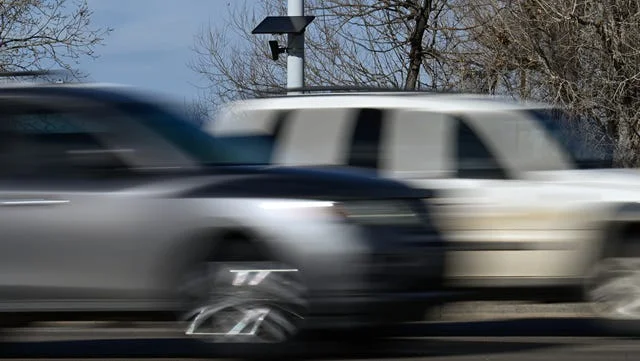
Colorado has introduced a new average speed camera system on Interstate 25 that calculates a vehicle’s speed over distance rather than relying on a single radar reading. This approach makes traditional radar detectors and app-based alerts far less effective while significantly reducing speeding in high-risk construction zones.
Unlike conventional speed traps, the system uses paired cameras placed at fixed intervals. Each camera captures license plate images and timestamps, allowing authorities to calculate a vehicle’s average speed across the monitored stretch. If that average exceeds the posted limit, a $75 civil fine is issued and mailed to the registered owner.
Apps like Waze typically warn drivers about fixed enforcement points, but this system doesn’t rely on a single location. Even if drivers slow down at one camera, maintaining high speeds between checkpoints can still result in a violation. However, motorists who reduce speed before reaching the second camera may still avoid penalties by lowering their average speed.
The Colorado Department of Transportation (CDOT) has focused this program on dangerous construction corridors, where narrow lanes and limited s
houlders make traditional enforcement risky. A five-mile stretch of I-25 south of Fort Collins is among the first areas to deploy the system, where new express lanes are under construction.
Before fines were enforced, CDOT implemented a 30-day warning period. During that time, excessive speeding dropped by as much as 90 percent in the monitored zone, highlighting the system’s effectiveness in improving safety for both drivers and road workers.
Violators receive a $75 fine, but no points are added to their driving record since the system cannot identify who was behind the wheel. Revenue collected is reinvested into the state’s speed enforcement initiatives. However, vehicles without license plates can evade detection entirely, exposing a loophole in the system.
The enforcement zones are clearly marked with warning signs placed at least 300 feet in advance. This ensures drivers are aware of the monitored area and have an opportunity to adjust their speed accordingly.
As Colorado expands this program, average speed enforcement could become a model for safer and more efficient traffic control, especially in hazardous work zones where traditional policing methods fall short.