Chevrolet has introduced the redesigned Sonic in Brazil, marking a significant shift from its previous sedan and hatchback forms. The new Sonic debuts as a compact crossover, positioned for emerging markets and not expected to reach the US or European showrooms.
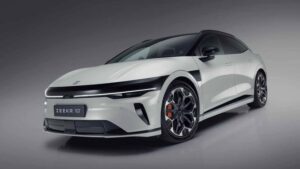
The latest Sonic features a bold front fascia with a split grille and slender LED daytime running lights that double as turn signals. Projector beam headlights, claimed to be 20% brighter than conventional units, complete the front-end update. The RS trim includes plastic body cladding and black accents, enhancing its crossover character, while a functional roof rack supports up to 50 kg. Unique 17-inch wheels are available for each trim level, and the rear design draws inspiration from the Equinox EV, incorporating a pronounced spoiler, angular rear window, full-width light bar, and black badging.
The crossover utilizes the Global Emerging Markets platform and measures 4,230 mm in length, 1,770 mm in width, and 1,530 mm in height. These dimensions make the Sonic notably more compact than Chevrolet’s Trailblazer, yet it fills the gap between the upcoming Onix Activ and the Tracker in Chevrolet’s regional lineup.
Chevrolet provided only a brief look at the interior but confirmed the presence of a “virtual cockpit system,” combining a digital instrument panel with advanced multimedia connectivity. Additional interior highlights include soft-touch accents, piano black inserts, and premium seat covers, promising a level of finish comparable to the brand’s larger utility vehicles.
While detailed powertrain information remains undisclosed, Chevrolet indicated that turbocharged engines will be standard at launch in Brazil. The development process for the new Sonic was entirely virtual, with artificial intelligence playing a key role from concept to production.
The redesigned Sonic is tailored to meet the needs of emerging markets, with a clear emphasis on style, connectivity, and practicality. Its compact dimensions and crossover styling reflect current market trends, especially in South America. The absence of naturally aspirated options and the focus on turbocharged engines signal a modernized approach to efficiency and performance. Although not destined for global markets like North America or Europe, the Sonic’s transformation showcases Chevrolet’s strategy to adapt legacy nameplates for new segments. The success of this model in Brazil will likely influence future product planning in similar regions as the crossover market continues to expand.