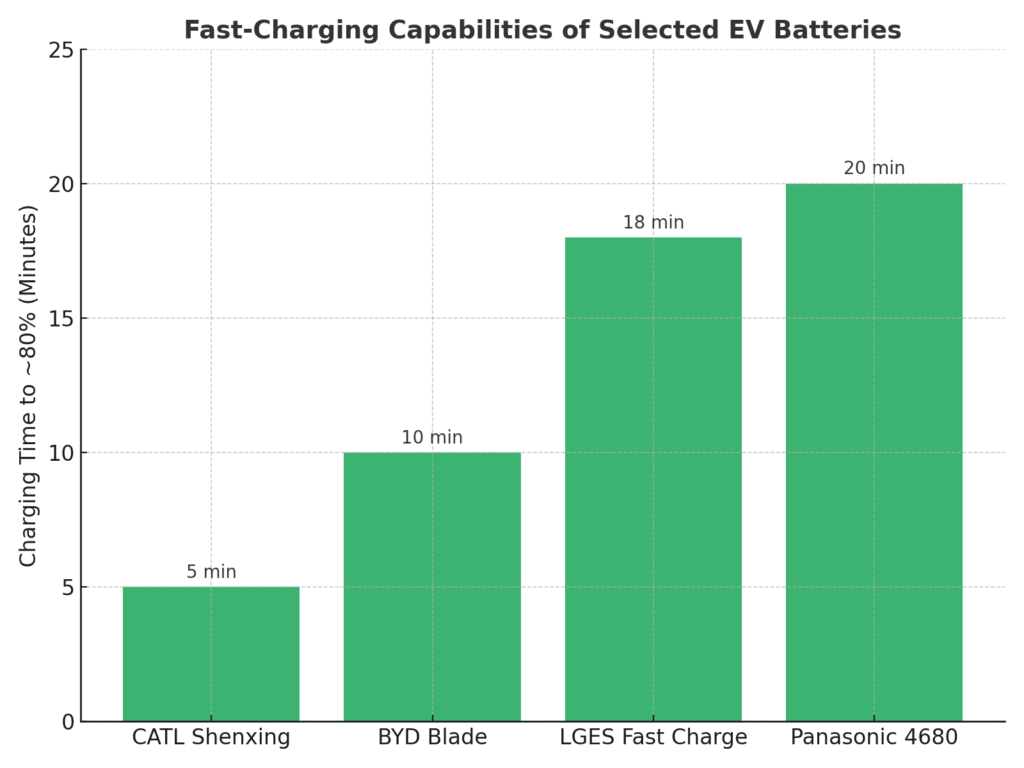
Chinese battery manufacturer CATL has announced its new Shenxing 3 battery, establishing a new benchmark in electric vehicle (EV) charging times. The new pack is capable of charging from 10 to 98 percent in just 6.5 minutes, overtaking BYD’s previous industry-leading nine-minute charge unveiled last month. The innovation further narrows the gap with internal combustion engine vehicles in terms of refueling speed.
The Shenxing 3 battery achieves a 10C charging rate, enabling it to recharge from 10 to 80 percent in a mere 3 minutes and 44 seconds. Notably, CATL claims these rapid charging capabilities are maintained even in lovere cold, with the battery able to charge from 20 to 98 percent in around nine minutes at -30°C. The company also reports that after 1,000 full charging cycles, the battery retains over 90 percent of its original capacity, addressing concerns about long-term durability.
Alongside the Shenxing 3, CATL introduced the Qilin 3 battery pack. This version offers an estimated range of up to 1,000 km (621 miles) while weighing just 625 kg. The lighter design is said to improve vehicle efficiency, acceleration, braking, and handling. CATL has also previewed the Qilin Condensed battery, which promises a range of up to 1,500 km (932 miles) in a sedan format or over 1,000 km in a full-size SUV, though this technology is expected to reach the market later.
CATL emphasized that the Shenxing 3 and Qilin 3 batteries are intended for near-term use in production vehicles, with first applications expected within the next year. The company is also developing a sodium-ion battery, scheduled for mass production by the end of 2026. These advancements are expected to significantly reduce range anxiety and the demand for extensive charging infrastructure, potentially accelerating EV adoption globally.
Editorial perspective: CATL’s rapid progress in battery technology demonstrates how quickly the EV segment is evolving. The ability to recharge nearly an entire battery in under seven minutes challenges one of the main barriers to electric vehicle adoption—long charging times. While BYD set a new standard only weeks ago, CATL’s leapfrogging move underlines the fierce competition in the battery sector, especially among Chinese manufacturers. If these new batteries deliver on their promises in real-world conditions, they could shift consumer perceptions and industry standards. However, mass production and widespread deployment remain the next hurdles, and the effect on market dynamics will be closely watched as automakers race to integrate these technologies.