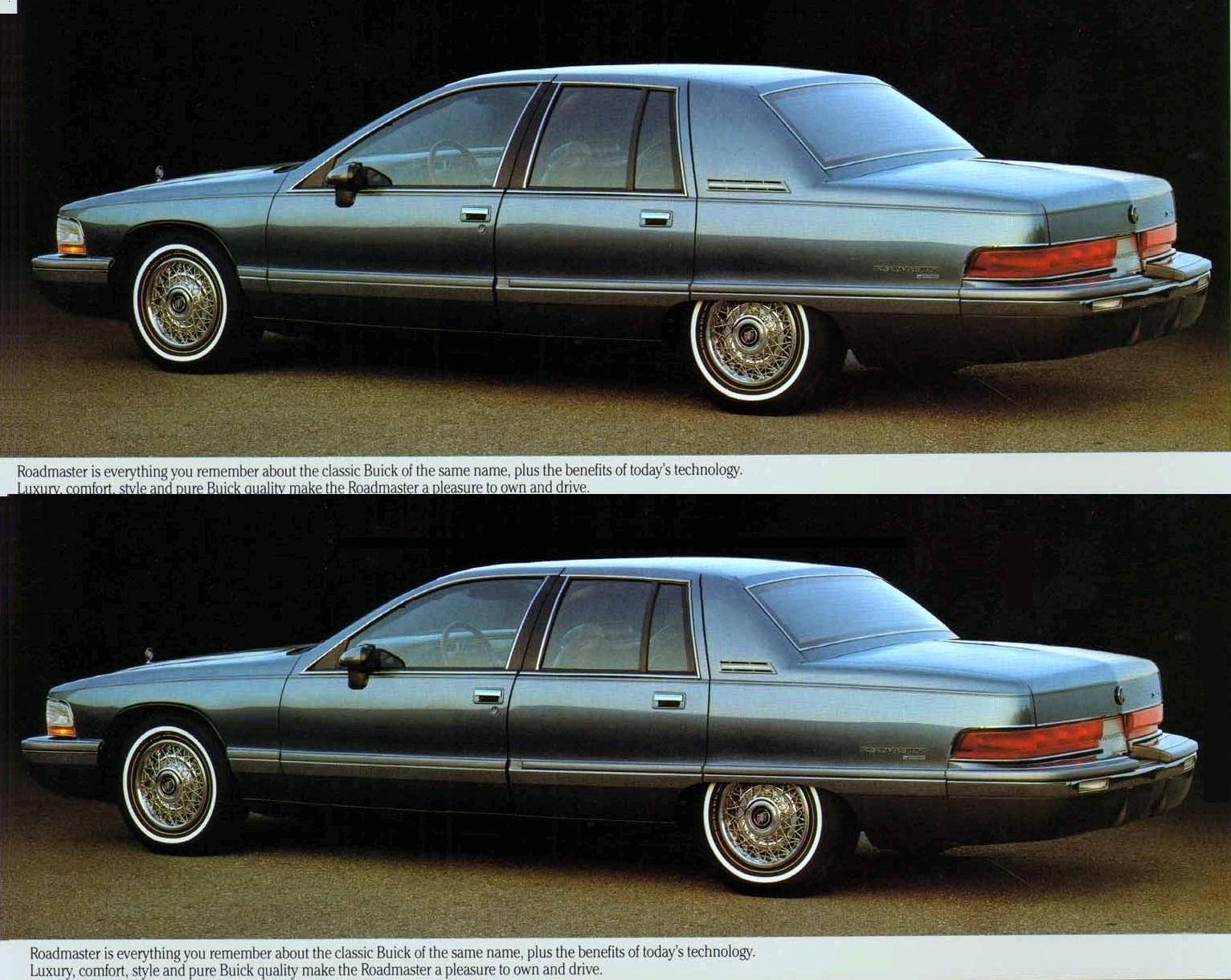
The Buick Roadmaster stands as one of General Motors’ most intriguing models, quietly embodying the last era of full-size, rear-wheel-drive American sedans. Produced throughout the 1990s, the Roadmaster offered a unique mix of performance, durability, and comfort that set it apart from its contemporaries, yet it remained largely unheralded during its production run.
At the heart of the Roadmaster’s appeal was its powertrain. The sedan was equipped with the LT1 small-block V8, a powerplant derived from the Chevrolet Corvette. While the Corvette’s version featured aluminum heads and delivered 300 horsepower, the Roadmaster’s Gen II LT1 came with iron heads, producing 260 horsepower and a robust 335 lb-ft of torque. This setup allowed the sedan to operate on regular 87-octane fuel, making it both practical and potent. With a 0-100 km/h acceleration of 7.8 seconds and a towing capacity of up to 2.270 kg (5,000 lbs), the Roadmaster surpassed many modern SUVs in utility and highway performance.
Unlike most rivals that shifted to unibody construction, the Roadmaster retained a body-on-frame platform, similar to pickup trucks of the era. This architecture, known as the B-body, contributed significantly to the sedan’s longevity and rugged feel. The platform also supported wagon variants, some with third-row seating, making the Roadmaster a practical choice for large families. Owners frequently reported high mileage, with properly maintained engines surpassing 300,000 miles. While some issues, such as the OptiSpark ignition system, affected reliability, overall durability remained a strong point.
Despite its robust build, the Roadmaster was renowned for its ride comfort. The large cabin provided ample space, featuring 42.1 inches of front legroom and up to nine seats in wagon models. This generous interior space was rare, even for its time, and is virtually unmatched in today’s sedan market. The comfort and quiet ride made the Roadmaster an ideal choice for families and long-distance travelers alike.
The Roadmaster arrived just as American consumer preferences began shifting toward SUVs. Its classic sedan formula—rear-wheel drive, body-on-frame construction, and a V8 engine—was out of step with the emerging trend toward smaller, front-wheel-drive vehicles. As a result, the model was largely overlooked, with only 90,700 units produced. Today, the Roadmaster is recognized as a hidden gem, appreciated by enthusiasts for its blend of performance, durability, and comfort.
The Buick Roadmaster represents the end of an era for American automotive design. Its combination of a Corvette-derived V8, traditional body-on-frame construction, and a cavernous interior made it a standout, even as market trends moved in a different direction. While it never achieved widespread recognition during its production years, the Roadmaster has since earned its place as a classic among those who value substance over fashion. Its robust engineering and practical features continue to attract a dedicated group of admirers, and with rising interest in classic American sedans, the Roadmaster’s reputation is likely to grow. For those who seek authenticity and a true sense of old-school American motoring, this Buick remains a compelling choice.