Uber says its vast pool of real-world trip data gives it a major advantage in deciding where new EV fast-charging stations should be built. As more ride-hailing drivers switch to electric vehicles and autonomous robotaxis move closer to wider deployment, the company is taking a more active role in shaping charging infrastructure.
Andrew Cornelia, Uber’s global head of electrification and sustainability, said one of the company’s strongest assets is the amount of data it collects from trips on its platform. According to Cornelia, Uber is using that information to identify where charging demand is highest and where new stations would be most useful.
This matters because fast-charging infrastructure is expensive to build and only becomes financially viable when stations are used frequently. Uber believes its data can help charging operators place new sites in areas where utilization is likely to be strong from day one.
In February, Uber announced a $100 million investment to support public fast-charging stations. The company plans to work with major charging networks, including EVgo in the United States and Ionity in Europe, to expand access in high-traffic areas.
Uber is also offering utilization guarantees to charging partners. This could reduce some of the financial risk for operators, as fast-charging hubs often require large upfront investment before they become profitable.
Cornelia said charging has now become a bigger concern for Uber drivers than vehicle cost. That shift reflects how quickly some ride-hailing drivers are moving toward EVs, especially in cities where regulations or incentives encourage electric driving.
New York City is one of the clearest examples. After 2023 Taxi and Limousine Commission rules encouraged more rideshare drivers to go electric, many drivers faced limited charging support. Although more chargers have since opened, congestion remains a problem at many locations.
To help reduce waiting time, Uber is adding recommendation technology inside its app. The feature can show EV drivers nearby charging stations and highlight locations with shorter queues.
For drivers who depend on the platform for income, charging delays can directly affect earnings. More reliable charger guidance could therefore become an important part of Uber’s wider electrification strategy.
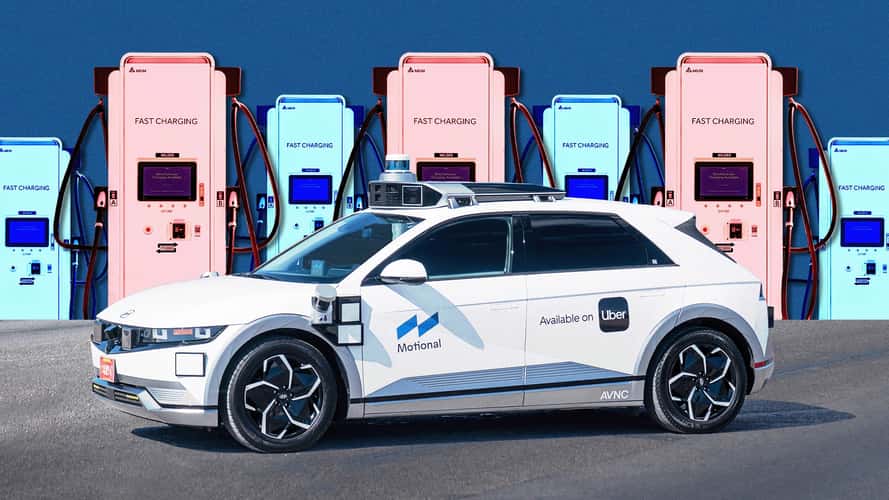
Uber is also preparing for a future in which autonomous vehicles play a larger role on its platform. Many of its robotaxi partnerships involve electric vehicles, meaning those fleets will also need dependable charging access.
The company is working with partners including Waymo in some cities, but Waymo is also a competitor in other markets. Tesla presents another challenge because it is developing its own robotaxi ecosystem, with its own vehicles, charging hardware and rider app.
Uber’s autonomous vehicle strategy still depends on how partnerships, regulation and competition evolve. Its charging strategy, however, appears more immediately useful. Human drivers are already moving to EVs, and better public fast charging would directly address one of their biggest concerns.
Newer charging stations are also becoming more powerful and more reliable. Many are being built near amenities such as convenience stores, restrooms and WiFi, making them more practical for professional drivers who need quick, predictable charging stops.
According to Cornelia, the future of mobility will be electric, autonomous and digitally enabled. For Uber, that future starts with making sure drivers and future robotaxi fleets have enough places to charge.