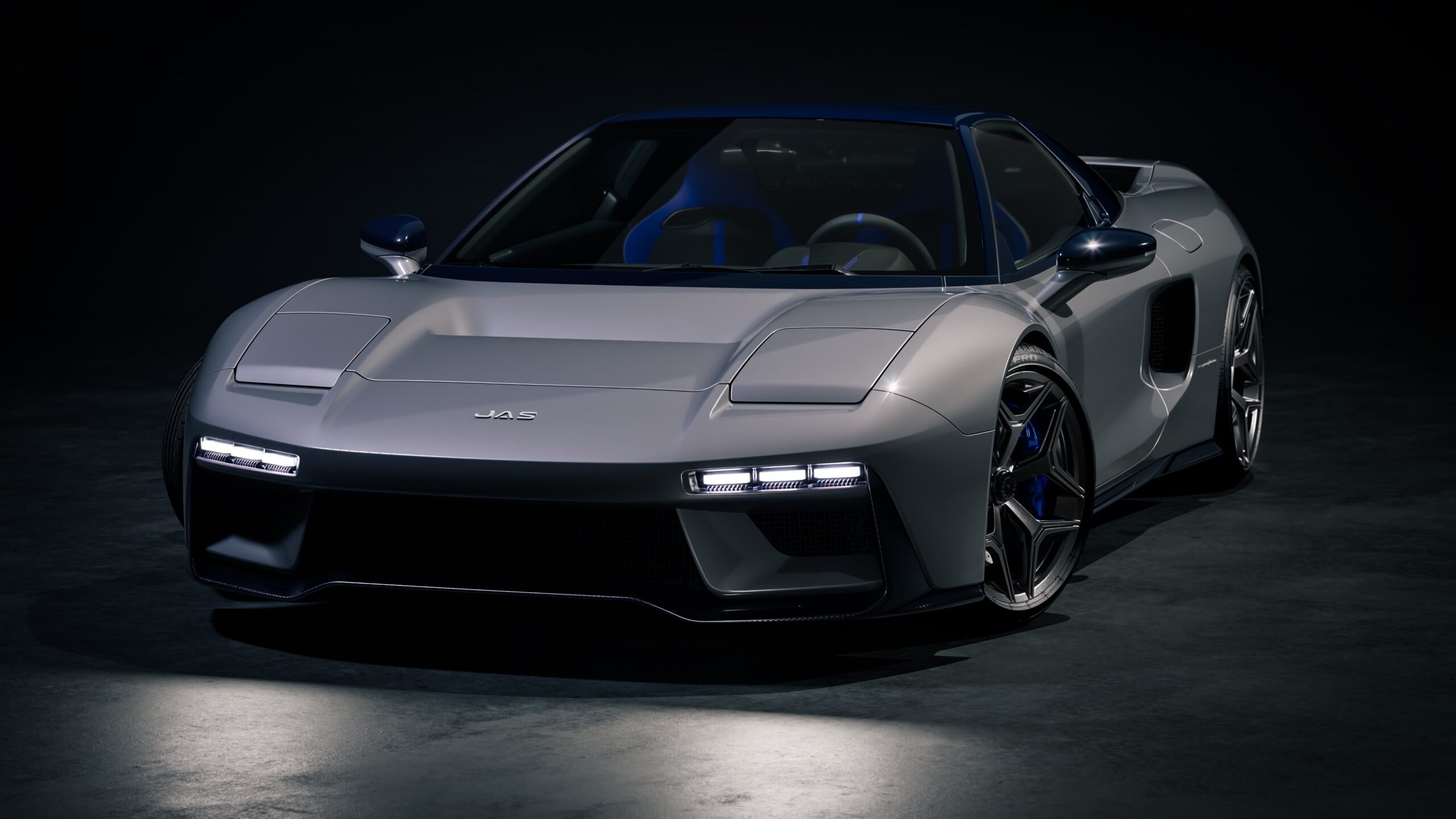
Pininfarina, in collaboration with JAS Motorsport, has unveiled further details on its ambitious NSX restomod project, codenamed Tensei, during Milano Design Week. The project revisits the iconic Honda NSX with a broader, lower stance and a renewed focus on driver engagement, staying true to its roots with a naturally aspirated V6 engine and a six-speed manual gearbox.
The Tensei distinguishes itself with revised proportions compared to the original NSX. It features a longer wheelbase, a wider track, a lower ride height, and larger wheels, all of which contribute to a more athletic appearance. The design retains the classic pop-up headlights and an integrated rear spoiler, both reinterpreted for the modern era. Pininfarina’s signature ‘triangular gestures’ in the bodywork evoke similarities to other legendary models, including the Pininfarina-designed Ferrari 288 GTO.
Under the carbon fiber body, the Tensei houses a naturally aspirated V6 engine derived from the original NSX, tuned for increased power, torque, and responsiveness. The six-speed manual transmission emphasizes a purist driving experience—there are no turbochargers, hybrid systems, or paddle shifters. This setup targets enthusiasts seeking authentic engagement, offering a contrast to the technology-driven approach of many contemporary supercars.
Pininfarina has focused on preserving the original NSX’s driver-centric ergonomics and excellent visibility in the Tensei’s interior. While images have not yet been released, the company promises enhanced perceived quality through bespoke switchgear and premium materials. Analog gauges are anticipated, reinforcing the analog driving theme.
The Tensei will be hand-built at JAS Motorsport’s workshop near Milan, with customisation options managed at Pininfarina’s facility in Cambiano, Turin. This project revisits Pininfarina’s historic relationship with Honda, which dates back to the HP-X concept of 1984, a precursor to the NSX. Full technical details, pricing, and production numbers are expected to be announced by the end of 2026.
Editorial Comment: The Tensei project reflects a growing trend of restomods that blend classic design with modern engineering. Pininfarina and JAS Motorsport have chosen a path that prioritises driving purity and craftsmanship over digitalisation, a move likely to resonate with collectors and enthusiasts who value analogue experiences. By retaining key features from the original NSX while introducing significant technical upgrades, the Tensei positions itself as an exclusive, highly customisable offering in the restomod market. Its success will depend on execution and pricing, but it already stands out for its clear vision and respect for automotive heritage.