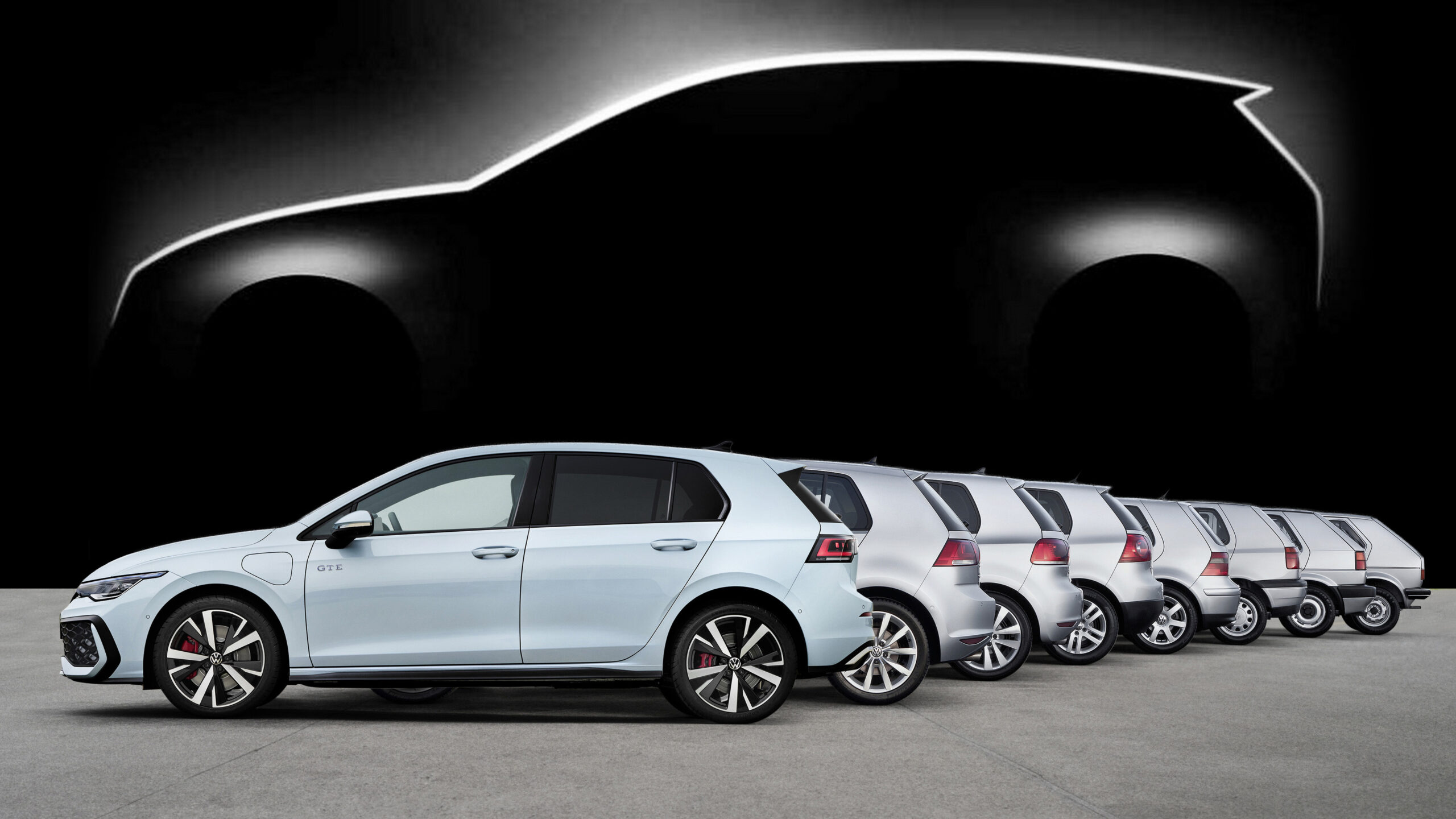
Volkswagen has shared new information about the next-generation Golf, known as the Mk9, currently under development. Company leadership has expressed confidence in the new model’s direction, highlighting both its design inspiration and its broad range of powertrain options. The Golf Mk9 is still loveral years away from market launch, but its development is advancing steadily.
According to Volkswagen CEO Thomas Schäfer, the Golf Mk9’s design draws from the iconic Golf Mk4, aiming for a timeless and recognizable look. Schäfer described the first full-size prototype as ‘beautiful,’ noting that it impressed the entire senior management team. Kai Grünitz, Volkswagen’s head of technical development, added that the design is nearly finalized, capturing the simplicity and clarity that have historically defined the Golf line. Grünitz emphasized that the new Golf will be instantly recognizable, even without badges.
The Golf Mk9 will be available with fully electric (BEV), plug-in hybrid (PHEV), and internal combustion engine (ICE) options. Volkswagen has confirmed that each powertrain will use a different platform: the new SSB platform for the electric version, and the MQB Evo architecture for combustion and hybrid variants. For a period after launch, both the new electric Golf and the current electrified Golf models will be sold in parallel, offering customers a variety of choices depending on their needs and preferences.
Andreas Mindt, previously head of design at Volkswagen and now with the Volkswagen Group, has played a significant role in shaping the new Golf. Mindt’s vision fo
cuses on a ‘pure, simple’ design that distills the essence of the Golf’s history. He has assured that the Golf will retain its identity, regardless of future changes. Regarding model names, Volkswagen intends to move away from numeric designations toward more traditional names, though the ID.3 Neo remains distinct from the Golf despite speculation.
The Golf remains one of Volkswagen’s most important models, and the company is aware that expectations are high for the ninth generation. The Mk9’s blend of heritage-inspired design and modern powertrain options is intended to appeal to both long-time Golf enthusiasts and new customers interested in electrification. Notably, performance-oriented versions such as the GTI and R are expected to continue with combustion engines, maintaining appeal for driving enthusiasts.
The decision to reference the Golf Mk4 for the Mk9’s design underlines Volkswagen’s intent to balance tradition with innovation. Offering both electric and combustion variants on separate platforms ensures that the Golf remains relevant in a rapidly evolving market. The company’s transparent approach to design and naming shows a renewed focus on brand legacy. While the electric Golf marks a significant shift, retaining classic models and performance versions should help satisfy a broad customer base. The Mk9’s launch will be a crucial moment for Volkswagen as it seeks to maintain the Golf’s status as a mainstay in the compact car segment. Looking ahead, how well the Mk9 adapts to shifting consumer expectations and regulatory demands will determine its impact in an increasingly competitive landscape.