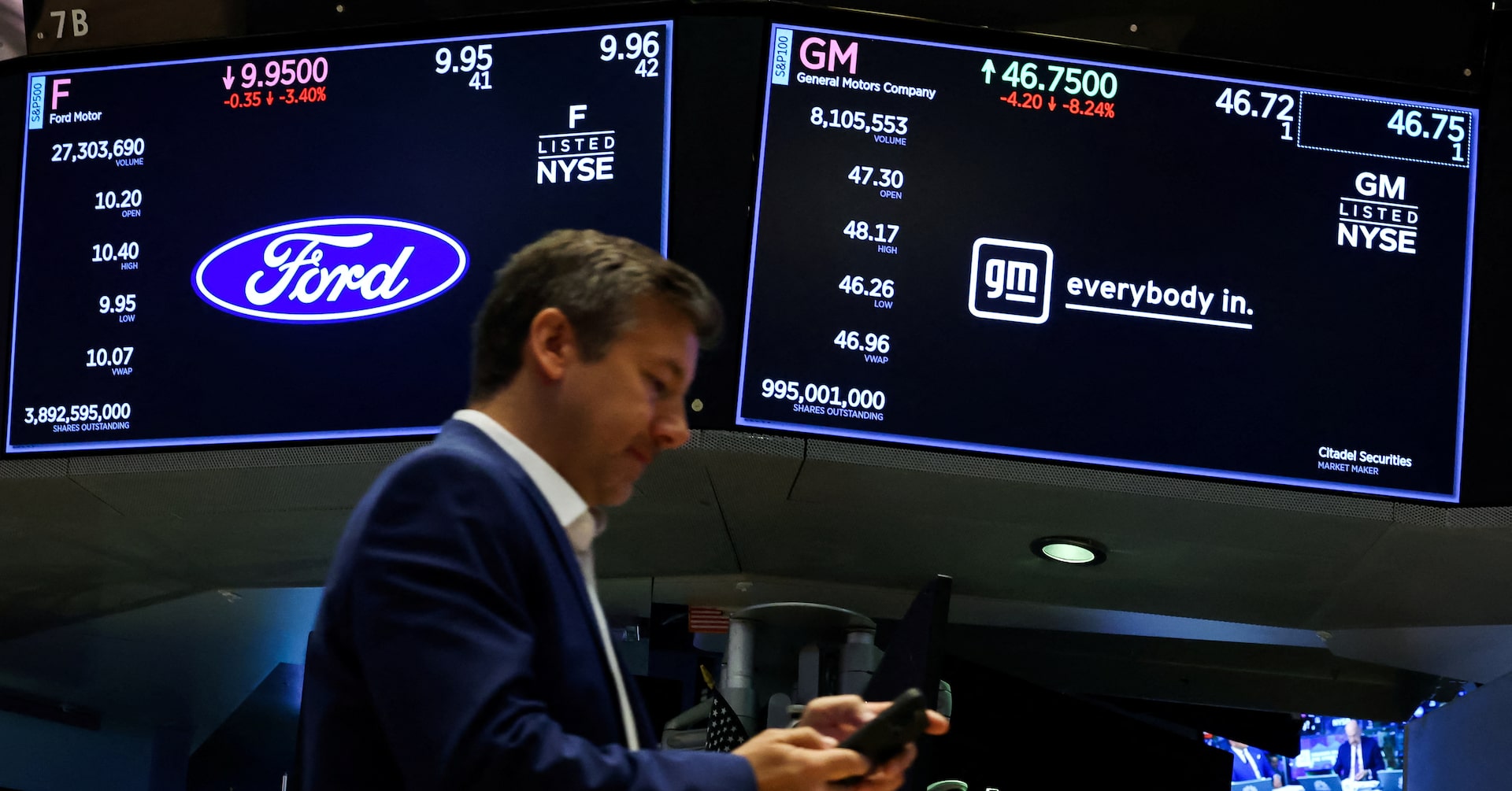
In a year marked by hefty financial setbacks from electric vehicle investments, top executives at General Motors and Ford received significant pay increases. Despite GM recording a $7.9 billion write-down on its EV spending, CEO Mary Barra’s compensation rose to $29.9 million. Ford, facing its own $19.5 billion in EV-related losses, revised bonus criteria and awarded CEO Jim Farley a total of $27.5 million.
General Motors faced a substantial financial blow as it scaled back its electric vehicle program, leading to a $7.9 billion write-down. Regulatory filings reveal that Mary Barra, now in her twelfth year as GM’s CEO, earned $29.9 million in 2023, representing a 1.4 percent increase from the previous year. Barra’s base salary stood at $2.1 million, while her stock awards increased by 11 percent to $21.6 million. Meanwhile, her non-equity incentive plan compensation decreased by 26 percent to around $5 million.
Interestingly, Barra was not GM’s highest-paid executive. Chief product officer Sterling Anderson, who joined GM from Aurora Innovation, received a compensation package valued at $40.3 million, largely due to a substantial signing bonus. Other senior leaders, such as President Mark Reuss and CFO Paul Jacobson, also received notable raises.
Ford’s electric vehicle strategy overhaul led to $19.5 billion in write-offs last year. However, the automaker changed its bonus rules to include not only electric vehicles but all electrified vehicles, such as hybrids. This adjustment allowed Ford to surpass its electrified vehicle sales targets, resulting in CEO Jim Farley’s pay increasing by 11 percent to $27.5 million. This was despite Ford posting an $8.2 billion annual loss, its largest since 2008.
A Ford spokesperson noted that Farley’s compensation reflects the company’s total performance, which included a 42 percent total shareholder return and record revenue. The company also emphasized the strategic importance of a diverse electrified vehicle portfolio and did not adjust bonus calculations for unexpected costs like tariffs.
Stellantis, another major automaker, also reported significant EV-related losses, taking a $26.2 billion hit due to over-investment in electric vehicles. CEO Antonio Filosa, who led the company for the latter half of the year, received $6.37 million in total compensation.
The disconnect between executive compensation and financial performance, particularly in the context of costly EV write-downs, is drawing attention across the industry. While automakers like GM and Ford continue to invest in electrification, the financial risks are substantial. Executive pay packages are being justified with metrics such as shareholder returns and overall company performance, even as direct EV losses mount. This approach could raise questions among investors and the wider public about accountability and long-term strategy. As the automotive sector navigates the challenging transition to electric mobility, how companies align executive incentives with sustainable financial results will remain a key issue. The evolution of bonus structures to include hybrids suggests that automakers are hedging their bets, reflecting ongoing uncertainty in the path toward full electrification.