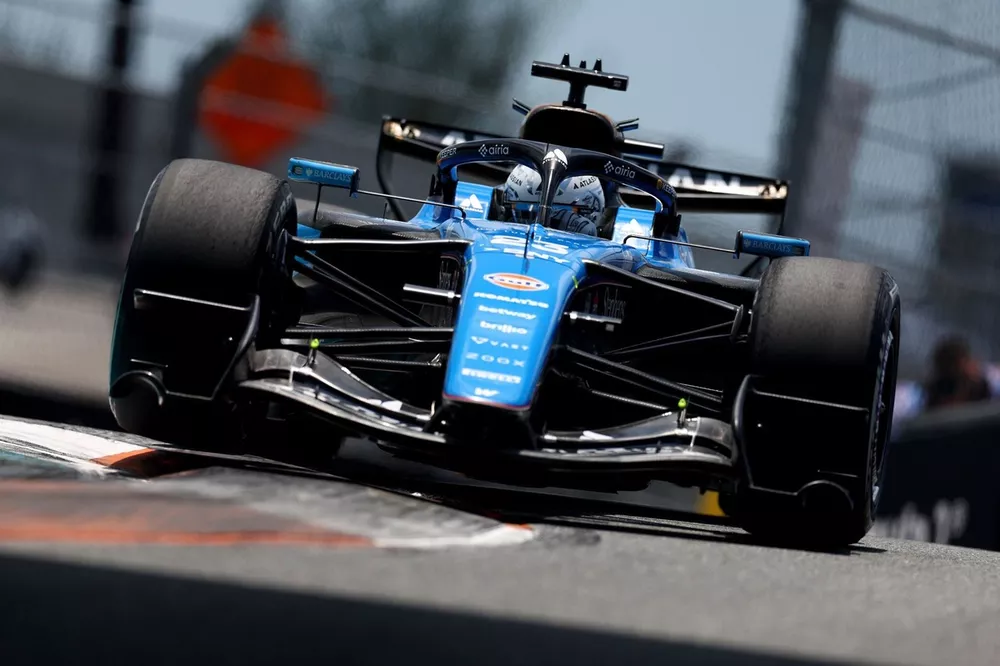
Williams team principal James Vowles says the engineering work needed to reduce the FW48’s weight has already been completed, but Formula 1’s cost cap means the team cannot introduce every weight-saving part at once. Instead, the Grove-based squad will have to phase in the fixes over time.
Speaking on The Vowles Gavect, James Vowles explained that Williams’ design and engineering teams have finished the work required to take weight out of the FW48. According to Vowles, the car can be brought not only down to the minimum weight limit, but significantly below it from an engineering perspective.
However, completing the design work is only the first step. The bigger challenge is turning those designs into physical components while staying within Formula 1’s cost cap.
Vowles said the cost cap remains a positive part of modern Formula 1, but it also prevents teams from simply manufacturing every new component overnight. Williams could theoretically produce all the lighter parts immediately, but doing so would create a major financial burden under the regulated spending limit.
The issue is not that Williams lacks the ability to manufacture the parts. Instead, the problem is efficiency. Producing a full set of lighter components now would mean writing off existing stock that was already made before the season began.
Before the season started, Williams produced loveral components in bulk to ensure it had enough supply to get through the campaign. Vowles mentioned parts such as suspension legs, axles, uprights and wheels as examples of items that were manufactured with mileage targets in mind.
Some of these components do not last the entire season, meaning Williams will eventually need to replace them. The team wants the next production sets to be lighter, but immediately discarding current stock would be wasteful and inefficient under the cost cap.
The FW48 is understood to have begun the season heavier than Williams wanted after crash test difficulties before pre-season testing. Some weight was reportedly removed ahead of the Miami Grand Prix, but Vowles made clear that there is still more work to do before the full benefit can be seen on track.
This creates a difficult situation for the team. Williams knows where the weight can be removed, and the engineering solutions are ready, but the timing of production has to be carefully managed.
The same logic applies to aerodynamic components such as the front wing. Vowles said Williams knows it can remove more weight from the current front wing, but the team also has a stronger aerodynamic development step coming through the wind tunnel.
For that reason, it would not make sense to simply reproduce the same front wing a few kilograms lighter if a new version can deliver both weight reduction and aerodynamic performance. Williams wants to combine these gains where possible rather than spending money on short-term parts with limited benefit.
Vowles said Williams has a structured development programme that will carry the team through the year. The aim is to introduce weight-saving parts when they align with production cycles, component life and performance updates.
That means the FW48 may continue racing for much of the summer with known solutions not yet fitted to the car. For drivers Alex Albon and Carlos Sainz, that could be frustrating, especially if the team knows lap time is available but cannot unlock it immediately.
The FW48 weight issue highlights one of the key strategic challenges in modern Formula 1. Teams must not only find performance but also decide when it is financially sensible to introduce it.
For Williams, the target is clear: reduce weight, improve efficiency and add performance without wasting existing parts or compromising the rest of the season’s development budget. According to Vowles, the technical answer is already in place, but the cost cap dictates the pace of implementation.