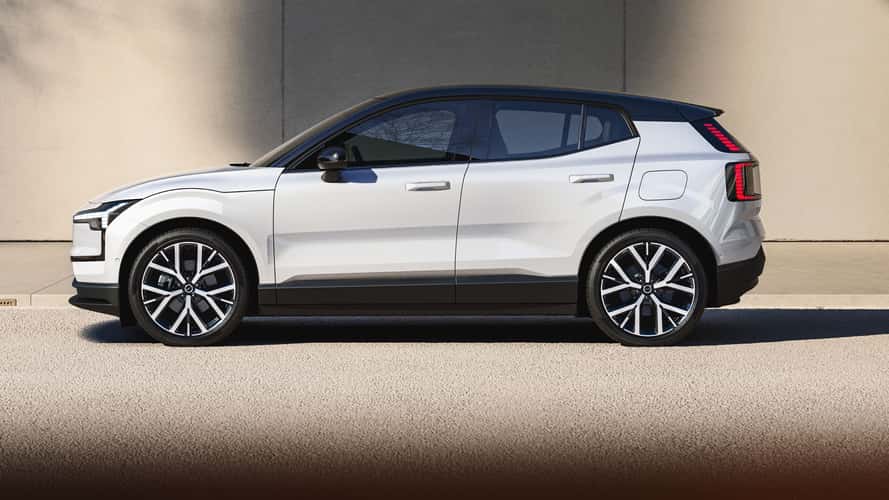
Volvo is preparing a new entry-level electric vehicle for the United States after removing the EX30 from its American lineup. The upcoming model is expected to arrive next year, offering a larger footprint than the EX30 while staying close to the same general price territory.
The EX30 was originally meant to be Volvo’s more accessible mainstream EV in the US. However, tariffs and changing policy conditions pushed the compact electric SUV’s pricing higher than expected, weakening its position as an affordable option.
Volvo initially targeted a $35,000 starting price for the EX30 in America. In practice, the model launched at more than $45,000, while a cheaper single-motor version arrived later at around $40,000. In March, Volvo removed the EX30 from its US lineup.
According to Luis Rezende, president of Volvo Cars America, the brand will bring a new vehicle that will not match the EX30’s price point exactly, but will sit very close to it. He confirmed that the new model is expected next year.
Volvo has not released full specifications for the upcoming model, but Rezende said it will be bigger than the EX30. He described it as an EV that will offer more space while still being enjoyable to drive.
That suggests Volvo wants to keep the idea of an attainable electric SUV alive in the US, but with a product that may better fit American buyer expectations. A slightly larger body could also help the new model avoid being seen as too small for its price point.
One possibility mentioned in the source material is that the new EV could be a next-generation EX40 based on Volvo’s newer SPA3 architecture. The current EX40 uses a reengineered version of a combustion-engine platform and is currently much more expensive than the base EX30 in the US.
Volvo’s SPA3 platform underpins the newly introduced EX60 and is designed to be highly scalable. Anders Bell, Volvo Cars’ chief engineering and technology officer, said the architecture can stretch across a wide range of vehicle classes, from subcompact B-segment models to large luxury F-segment vehicles.
Bell explained that electric platforms can offer far greater modularity than traditional combustion-engine architectures. With shared battery types, common software and a unified electrical architecture, Volvo believes SPA3 can support very different vehicle sizes without needing multiple separate platforms.
The timing is notable because the Volvo EX60 has just made its US debut, with orders now open and deliveries expected to begin in late summer. Volvo presents the EX60 as one of its most advanced vehicles, using the latest technology and a modern EV platform.
If Volvo can adapt the same technical base to a smaller and more affordable model, its next entry-level EV could become a stronger product than the EX30 was in the US market. The company will need to balance pricing, size, range and equipment carefully, especially after the EX30’s original value proposition was weakened by higher-than-expected pricing.
The EX30’s removal left Volvo without a true affordable electric entry point in the United States. A larger replacement could help the brand rebuild that part of its lineup while avoiding some of the compromises that affected the EX30’s American launch.
For buyers, the key question will be whether Volvo can deliver a genuinely accessible EV with enough space, range and technology to compete in the crowded compact electric SUV segment. More details are expected as the new model moves closer to launch next year.