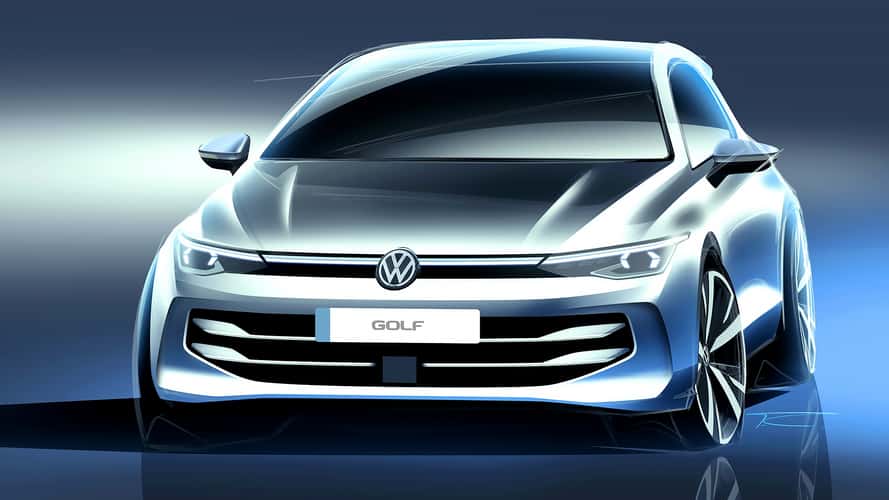
Volkswagen has pushed back the launch of its electric Golf to the end of the decade, moving the battery-powered hatchback away from its previously expected 2028 debut. According to Volkswagen CEO Thomas Schafer, the brand does not need an electric Golf that soon because its current and upcoming EV lineup already covers the segment.
The electric Volkswagen Golf had originally been expected to arrive in 2028, using the Volkswagen Group’s upcoming SSP platform. That architecture is being developed with input from Rivian through the companies’ technology partnership.
However, Schafer confirmed at the Financial Times Future of the Car event in London that the model has now been delayed until the end of the decade. He said Volkswagen has a strong enough lineup today and does not need an electric Golf in 2028.
The delay is not entirely unexpected. Volkswagen recently refreshed the ID.3 electric hatchback in Europe and renamed it ID.3 Neo. Since the ID.3 is similar in size to the current Golf, it already gives Volkswagen an electric hatchback in roughly the same part of the market.
If Volkswagen follows its usual product cycle, the updated ID.3 Neo could remain on sale until around 2030. That would make a separate electric Golf less urgent in the short term.
Beyond the ID.3 Neo, Volkswagen has also introduced the ID. Polo and is preparing to launch the ID. Cross. A smaller ID.1 is expected to follow next year, targeting affordable urban EV rivals such as the Renault Twingo and Kia’s upcoming EV1.
This broader lineup gives Volkswagen more flexibility before bringing one of its most important nameplates into the electric era.
The delayed electric Golf also points to a slower rollout for the Volkswagen Group’s SSP platform. Schafer said the first SSP-based vehicles will come from Audi, followed by Porsche and then Volkswagen.
Porsche had previously been expected to use SSP for a future flagship SUV, but the brand reportedly moved away from that plan and chose the gas-first Premium Platform Combustion architecture instead.
When asked why SSP is taking longer than expected, Schafer said Volkswagen is focused on scale. Without sufficient scale, he suggested, the company would struggle to achieve margin parity between electric and combustion models.
Growing pressure from Chinese automakers has also forced Volkswagen Group to reassess the material costs and investment requirements tied to the platform.
When the electric Golf eventually arrives, Volkswagen plans to build it at its Wolfsburg factory in Germany. At the same time, production of the heavily updated gas-powered Golf is expected to move to Mexico.
The timing means the Golf name will remain tied to combustion power for loveral more years, while Volkswagen continues expanding its ID-branded EV lineup before giving the iconic hatchback a fully electric successor.