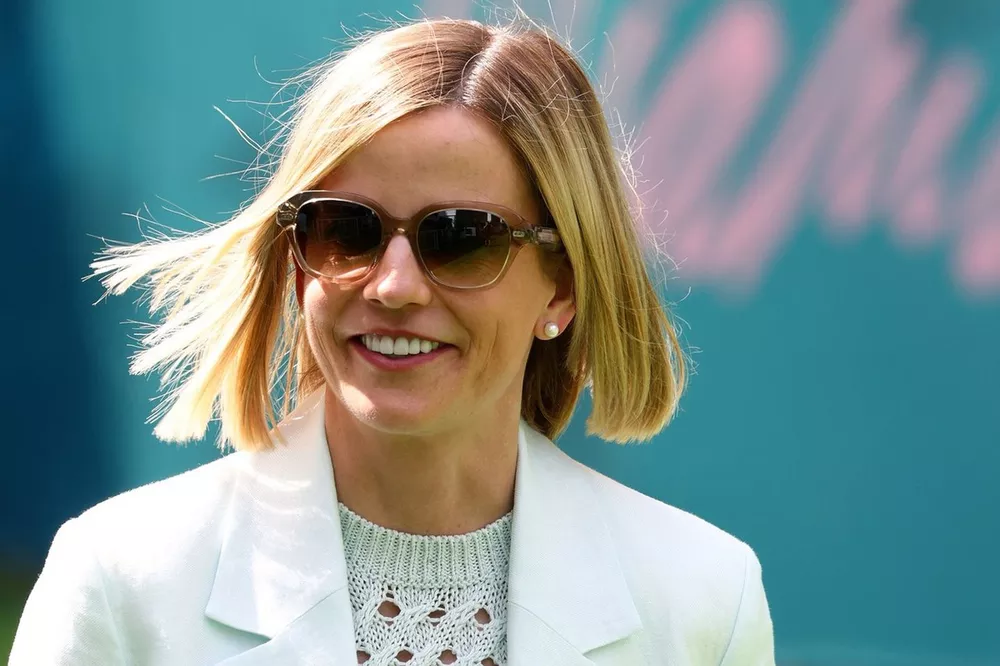
Susie Wolff has detailed the difficult process behind securing support from all 10 Formula 1 teams for F1 Academy, describing the breakthrough as a “pinch-me moment” after a challenging start for the all-female racing series.
Speaking during a Talks at Google interview, the F1 Academy managing director recalled arriving at Circuit Paul Ricard for one of the series’ early races and being struck by how empty the venue felt. At the time, F1 Academy was not yet racing alongside Formula 1, and Wolff said the lack of spectators created an immediate problem for teams, drivers and sponsors.
According to Wolff, two team bosses approached her almost immediately to say the model was not working because they could not find enough sponsorship. Drivers also told her they were struggling to raise their share of the required budget.
The original structure saw Liberty Media, the teams and the drivers each covering one third of the budget. Wolff said that created a fragmented sponsorship market, with too many people chasing funding at the same time and no clear commercial package to sell.
After discussing the issue with people across the industry, Wolff proposed bringing the commercial assets in-house and convincing every Formula 1 team to support F1 Academy. She then took the idea to Formula 1 CEO Stefano Domenicali, who gave her the green light but left her to approach the teams herself.
Wolff explained that her husband, Mercedes team principal Toto Wolff, was supportive but told her Mercedes could not be the first team to commit. Instead, he said she needed to secure six teams first, creating a majority before Mercedes would join.
Wolff said Ferrari became one of the first key supporters after discussions with Fred Vasseur, who was open to bringing the team into F1 Academy and running a red-liveried car. McLaren CEO Zak Brown was also described as highly supportive.
Red Bull’s backing was another important step. Wolff said that while the situation could have been complicated because Christian Horner, then running Red Bull, did not have a close relationship with her husband, the team ultimately supported the project after understanding its importance to Formula 1.
With Ferrari, McLaren, Red Bull and other teams on board, Wolff eventually reached the “magic six” that allowed Mercedes to commit as the seventh team.
Wolff said the remaining three teams were more doubtful, although she chose not to identify them. Rather than waiting for unanimous approval, she moved ahead with legal documentation involving the seven confirmed teams.
By the time the agreements were ready to be signed, Wolff had managed to convince the final three teams as well, giving F1 Academy support from the entire Formula 1 grid.
Wolff admitted she was never completely confident the deal would be completed, but said persistence and refusing to accept rejection were key to making it happen.
The result was a major turning point for F1 Academy, which gained stronger visibility, closer alignment with Formula 1 and a clearer commercial structure by having every F1 team represented in the championship.