Ultra-fast EV charging is entering a new phase in the United States. After years in which 300 kW chargers were considered cutting-edge, charging companies are now preparing 500 kW, 600 kW and even megawatt-class hardware. The problem is simple: most electric cars on American roads cannot yet take full advantage of that power.
The next generation of EV charging infrastructure is already taking shape. ChargePoint recently introduced a 600 kW standalone charger, while ABB has announced plans for 1.2 megawatt charging hardware. Kempower has also revealed a charger with a Megawatt Charging System connector capable of 1.2 MW, alongside a CCS plug rated at 560 kW.
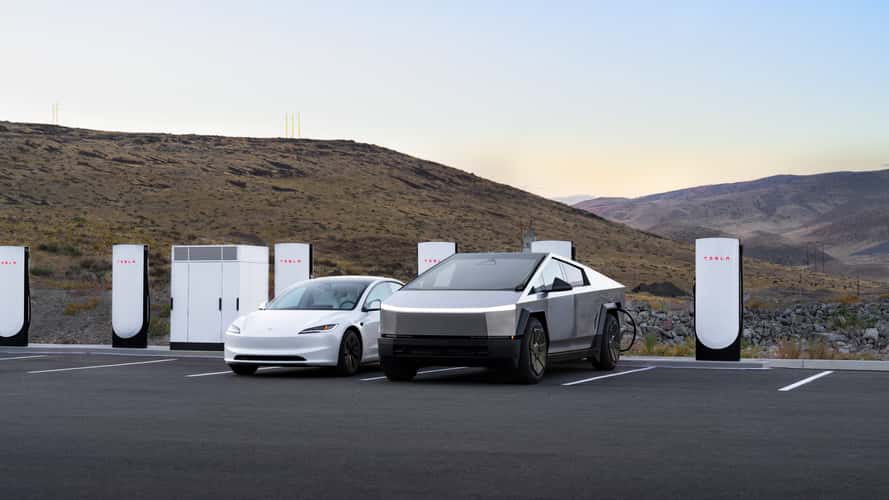
Alpitronic is preparing high-power chargers that can deliver up to 1,000 kW to electric semi trucks and up to 600 kW to passenger EVs. According to the source, those units are expected to start reaching the US market early next year. Tesla is also moving beyond its older 250 kW and 325 kW Supercharger limits by gradually rolling out 500 kW V4 stations.
Fast charging has long been one of the biggest barriers to wider EV adoption. Higher-powered chargers are designed to reduce charging stops and make electric vehicles feel more convenient on long journeys, especially as larger electric trucks, SUVs and commercial vehicles arrive.
These new chargers are not only about headline peak numbers. They can also distribute power more intelligently across loveral vehicles. That means one location could serve a low-power EV and a high-performance EV at the same time without wasting capacity or slowing every stall unnecessarily.
Modern charging networks already use dynamic load balancing, but megawatt-capable systems push the concept further. For example, an older Chevrolet Bolt may only need around 55 kW, while a high-end EV such as a Lucid Gravity could request loveral hundred kilowatts at the same site.
Instead of treating every charger as a fixed-output stall, the new systems can spread available power based on each vehicle’s actual charging capability and battery condition. This becomes especially useful at busy stations where many vehicles plug in at once.
The main limitation is no longer only the charger. According to the source, there is currently no passenger EV in the US market that can officially accept more than 500 kW of charging power. The Tesla Cybertruck has reportedly been seen pulling 500 kW at V4 Superchargers, although its official maximum charging figure is still listed at 325 kW.
Other fast-charging EVs available or coming soon in the US, including the Lucid Gravity, Porsche Cayenne Electric and BMW iX3, are said to top out around 400 kW. That means today’s most advanced chargers are being installed ahead of the vehicles that can fully exploit them.
Charging companies are still moving forward because they expect EV technology to catch up. Higher-power chargers can prepare networks for future electric cars, heavy-duty EVs and possible high-power models from brands that are currently pushing charging speeds in China and Europe.
China and Europe are already moving quickly with extreme fast-charging systems, including BYD’s 1.5-megawatt Flash charging stations. In North America, companies such as ChargePoint, ABB, Kempower, Alpitronic, Tesla and Ionna are preparing for a similar shift, even if today’s passenger EVs are not fully ready.
Ionna, the automaker-backed charging network, currently deploys 400 kW stations. CEO Seth Cutler told InsideEVs that this is enough for today’s vehicles, but the company is also evaluating higher-power charging for the future.
The key question is when and where those upgrades make sense. Installing ultra-high-power chargers before compatible vehicles arrive can be expensive, but waiting too long could leave networks behind as battery technology improves.
Megawatt EV chargers could eventually make long-distance electric driving faster and more convenient, especially for large SUVs, pickups and commercial vehicles. For now, however, the charging infrastructure is moving faster than most passenger EVs.
The next challenge belongs to automakers. Charging networks can install 500 kW, 600 kW and megawatt-capable hardware, but the vehicles must be able to safely accept that power before drivers see the full benefit.