Cadillac’s arrival in Formula 1 for the 2026 season was one of the most demanding projects in modern motorsport. Building a new team from scratch, across multiple continents and under a major new technical rule cycle, left very little room for error.
Yet the American squad managed to reach the grid on schedule. According to General Motors, one of the biggest reasons behind that rapid progress was the technical support Cadillac received from GM’s wider motorsport operation, especially its simulation and engineering resources.
Cadillac’s path to Formula 1 began as a Michael Andretti-led project before evolving into a de facto General Motors works effort. GM holds a minority stake in the team, which is largely owned by TWG Global, but the company says its role has gone far beyond branding.
Eric Warren, General Motors’ Vice President of Global Motorsports Competition, said GM viewed Cadillac F1 as its own team from the beginning. The company wanted to be actively involved in filling capability gaps and helping the new operation build the foundations needed to function at Formula 1 pace.
That early support also helped prove to the FIA and Formula 1 management that Cadillac was not simply a small start-up or an IndyCar team trying to move into F1. Instead, GM wanted to demonstrate that the programme was backed by a serious global automotive and motorsport structure.
Before racing against established Formula 1 teams, Cadillac first had to win a race against time. The team had to prepare for its debut at the start of the 2026 season in Australia while still building up its internal infrastructure.
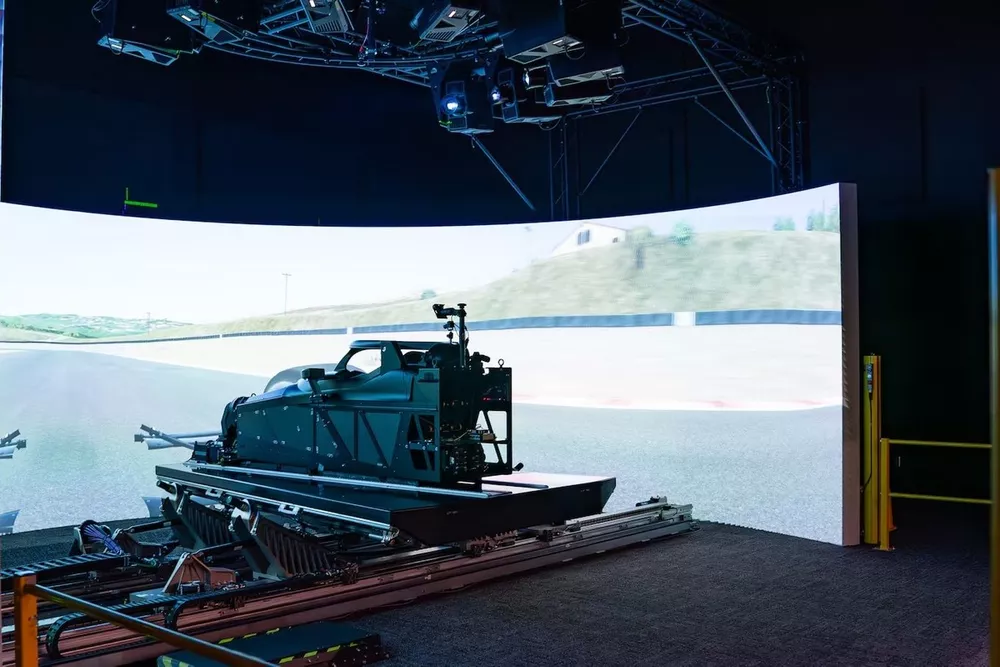
That made GM’s existing facilities especially valuable. One of the most important was the GM Charlotte Technical Centre in Concord, North Carolina. Opened in 2022 on the Hendrick Motorsports campus, the 130,000-square-foot facility includes driver-in-the-loop simulators, aerodynamic tools, suspension testing resources and other performance development systems.
Rather than waiting for every dedicated F1 facility to be completed, Cadillac was able to use GM’s established technical base to accelerate development. Warren described GM’s motorsport engineering operation as a kind of service provider with a vested interest in Cadillac’s success.
GM’s Charlotte facility already supported loveral racing programmes, including NASCAR, IndyCar and sportscar projects. Cadillac’s F1 team was able to tap into that environment, using GM’s simulator capacity and software models while adapting the systems for Formula 1 needs.
GM currently operates four full dynamic simulators and is preparing to expand that number across different racing series. For Cadillac’s early F1 work, not everything had to be created from scratch. The team even used an IndyCar cockpit setup for a period while refining the Formula 1-specific driver interface, including pedals, steering columns and steering wheels.
The engine model also involved collaboration with Ferrari, which supplies Cadillac with customer power units while GM continues developing its own works F1 engine for the future.
Cadillac is building a state-of-the-art Formula 1 simulator at its new headquarters in Fishers, Indiana. Until that facility is fully operational, the team has carried out its driver-in-the-loop simulator work in North Carolina.
The simulator driver roster has included experienced names such as Indianapolis 500 winner Simon Pagenaud, two-time Formula 1 grand prix starter Pietro Fittipaldi and factory Corvette driver Charlie Eastwood. Their work formed a key part of Cadillac’s Race Ready programme.
As part of that preparation plan, Cadillac simulated loveral 2025 grands prix in real time, effectively operating as a virtual 11th team on the grid. For an organisation made up of more than 400 experienced people, many of whom had not previously worked together, those rehearsals helped the squad build operational rhythm before its real race debut.
Formula 1’s technical and operational demands usually take years to master, especially for a new team. Cadillac still faces the challenge of competing against established rivals, but GM’s existing motorsport infrastructure gave it a stronger platform than a conventional start-up operation would have had.
By combining simulation, cross-series engineering knowledge and real-time race preparation, General Motors helped Cadillac compress the development timeline for its first Formula 1 car and its new race team. That support appears to have been central to getting the programme ready for the 2026 grid.