Honda has reported its first annual loss since becoming a publicly listed company in 1957, but the Japanese manufacturer says the result will not directly affect Honda Racing Corporation or its Formula 1 programme.
The company posted a loss of 423 billion yen, equivalent to around $2.68 billion, for the financial year ending in March. Honda had already signalled the loss in March through its financial forecast, before confirming the figures in its official announcement on May 14.
Despite the scale of the loss, Honda told Motorsport.com that the financial update does not bring specific changes to HRC’s motorsport activities.
According to the company, the outlook had already been clear since March, and HRC does not recognise any direct impact on its racing programmes from the financial announcement.
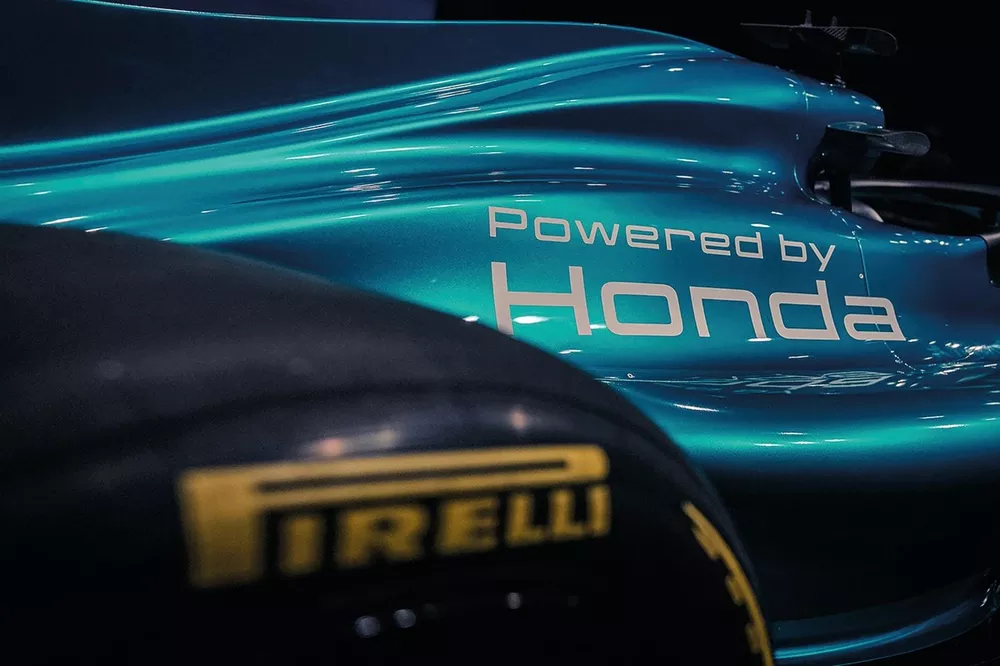
That means Honda’s Formula 1 plans remain intact for now. The manufacturer is preparing to return as a full power unit partner in 2026 with Aston Martin, following its earlier official withdrawal from F1 at the end of 2021.
The more important point is not simply the loss itself, but what caused it. Honda CEO Toshihiro Mibe linked the result largely to heavy investment in electric vehicles and the company’s wider electrification strategy.
Those investments have not yet delivered the expected returns, especially in the United States. The report also points to the removal of US EV tax credits under President Donald Trump in September 2025 as one factor that reduced buyer support for electric vehicles.
Honda is now making loveral strategic adjustments. The company has paused a planned $11 billion investment for EV and battery production in Canada, while also moving away from some of its earlier long-term EV targets.
From a Formula 1 perspective, Honda’s shift is significant because the company had previously been one of the strongest supporters of electrification in future engine regulations.
Mibe confirmed that Honda has dropped its earlier target for EVs to represent one fifth of all new car sales by 2030. The company has also abandoned, at least for now, its previous ambition to sell only electric cars by 2040.
This change comes at a time when Formula 1 is already debating whether future power unit rules should place more emphasis on internal combustion engines, supported by sustainable fuels, rather than pushing further toward electrification.
F1 CEO Stefano Domenicali recently suggested that sustainable fuel could become central to the sport’s next engine direction, with a different balance between electrification and a strong combustion engine.
FIA president Mohammed Ben Sulayem went further during the Miami Grand Prix weekend, saying a V8 engine “will definitely return” and that the FIA has the regulatory power to push such a change from 2031, while aiming to bring it forward to 2030 if possible.
The idea has received support from parts of the paddock. Mercedes team boss Toto Wolff said Mercedes is open to new engine rules and that the brand “loves V8s”, although he warned that F1 must still retain enough battery power to stay connected to real-world automotive development.
Wolff suggested that a future concept could combine a high-output combustion engine with a meaningful electric contribution, rather than returning to a purely combustion-based formula.
Ford, Red Bull’s current engine partner, is also open to a V8 future, according to Ford Performance director Mark Rushbrook. That leaves Audi and Honda as the two major manufacturers whose positions may be watched most closely.
Honda’s recent financial results do not mean its F1 project is under immediate threat. However, the company’s retreat from aggressive EV targets could make future F1 engine discussions more complicated, especially if the sport moves toward a stronger combustion engine supported by sustainable fuels.
For now, Honda insists HRC and its Formula 1 plans remain unaffected. But the broader industry trend that once pushed F1 toward heavier electrification appears to be changing quickly.